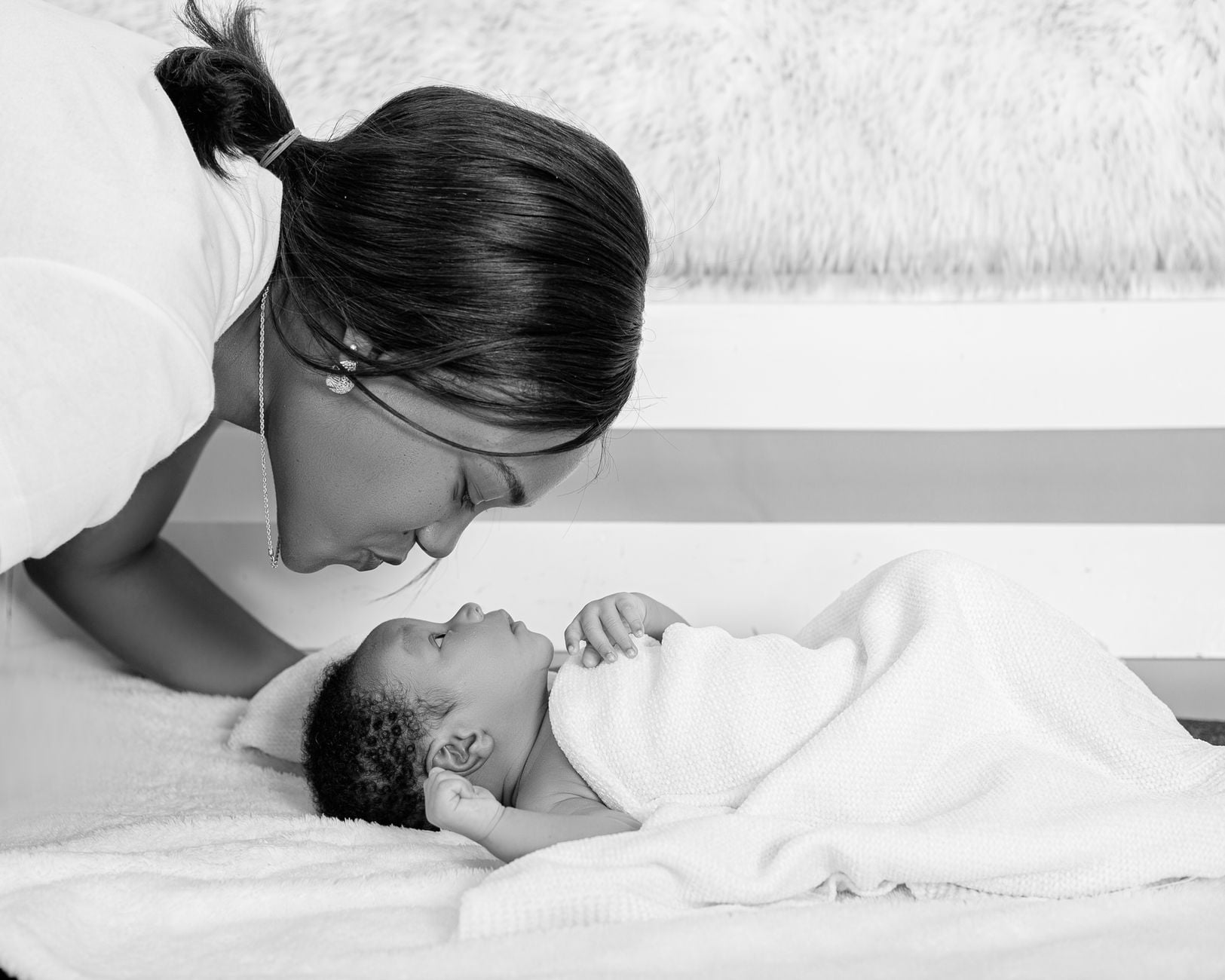
The Apron My Mother-in-Law Handed Me
The apron was already in her hand when I came around the corner into the kitchen.
It was the floral one, pink roses on a white ground, with the long ties that went twice around. Marge held it out to me the way you hold out a dish towel to somebody who has offered to dry.
“There you are,” she said. “I was about to send Ben up after you.”
It was twenty minutes to seven on a Thursday morning. I had Nora against my shoulder and one hand flat on the wall, because I still walked like a woman crossing ice. Nine days earlier a doctor had opened me from hip to hip and lifted my daughter out, and then closed me again with nineteen staples. I knew the number because I had counted them in the hospital mirror, twice, the way you count stairs in the dark. They had come out on the fifth day, and since then the only thing between me and the world was a row of paper strips.
I did not take the apron. I did not have a hand for it.
Marge laid it over the back of a kitchen chair and picked up an envelope from the counter. It was an old one from the electric co-op, turned over, with her square handwriting all down the back.
“Club is here at noon,” she said. “Two tables. I wrote it out so you wouldn’t have to keep asking me.”
She set the envelope on the table in front of the chair with the apron on it, and squared it with one finger.
I read it standing up.
Card tables up from the basement, two. Folding chairs, eight. Roaster up, ham in by nine. Iron both cloths. Good plates out of the hutch, wash and dry. Seven layer salad. Relish tray. Vacuum the front room. Coffee on at eleven thirty.
Ben was at the back door with one boot on. It was bean harvest, and the elevator where he worked was taking trucks until ten at night. He had been given three days off when Nora came and had been back on the scale ever since.
“Ben,” I said.
He looked up from his laces.
“Your mother wants me to put on her luncheon.”
I held the envelope out toward him. He did not come and take it. He glanced at it from where he sat, the way you glance at a grocery list on somebody else’s refrigerator.
“Well,” he said. He pulled the second boot on. “The nurse did say walking. She said it’d be good for you to move around some.”
He was not wrong about what the nurse had said. I want to be fair to him, because he was fair to me later. The nurse at discharge had told us both, with her finger on the page, that I should walk a little every day. She meant to the mailbox. She meant a slow lap of the living room with my hand on the furniture.
On the same sheet, two lines down, it said nothing heavier than the baby for six weeks, and stairs no more than once a day.
Ben had read the first line and remembered it. He had been asleep on his feet for the second.
“It’d be good for you,” he said again, kinder this time, and he kissed the top of Nora’s head, and then mine, and he took his lunch cooler off the counter and went out. I heard the car start. It was our car. Mine, really, the little Malibu I had bought before I knew him.