
“You still got the old feed pickup?” Curtis said, and that was the whole greeting. No hello, no Hanna, no how have you been for a year. Just the truck, like the truck was the only thing on the place he had ever needed from me.
I was on the back step of the rent house splitting kindling when the phone buzzed in my coat.
It was a little after noon on the fourth of November, and the snow had been coming sideways since a quarter to eight.
“It runs,” I said. I set the hatchet down on the block and waited, because I had been married to that man for nineteen years and I knew a pause when one was coming.
“Don’t make this a thing,” he said. “You fed them. Help gets called when there’s work. That’s all this is.”
Get a new story in your inbox every morning.
Facebook doesn’t show you every story we post. Our free newsletter does. Join 2,500+ readers.
Help. He said it the same way he had said it at the sale barn café the week the divorce was final, loud enough for the whole counter to hear, so that every rancher between Alva and the Kansas line would know who the cowman was in our family and who was the help.
I want to be fair to him, so I will tell you what he was up against.
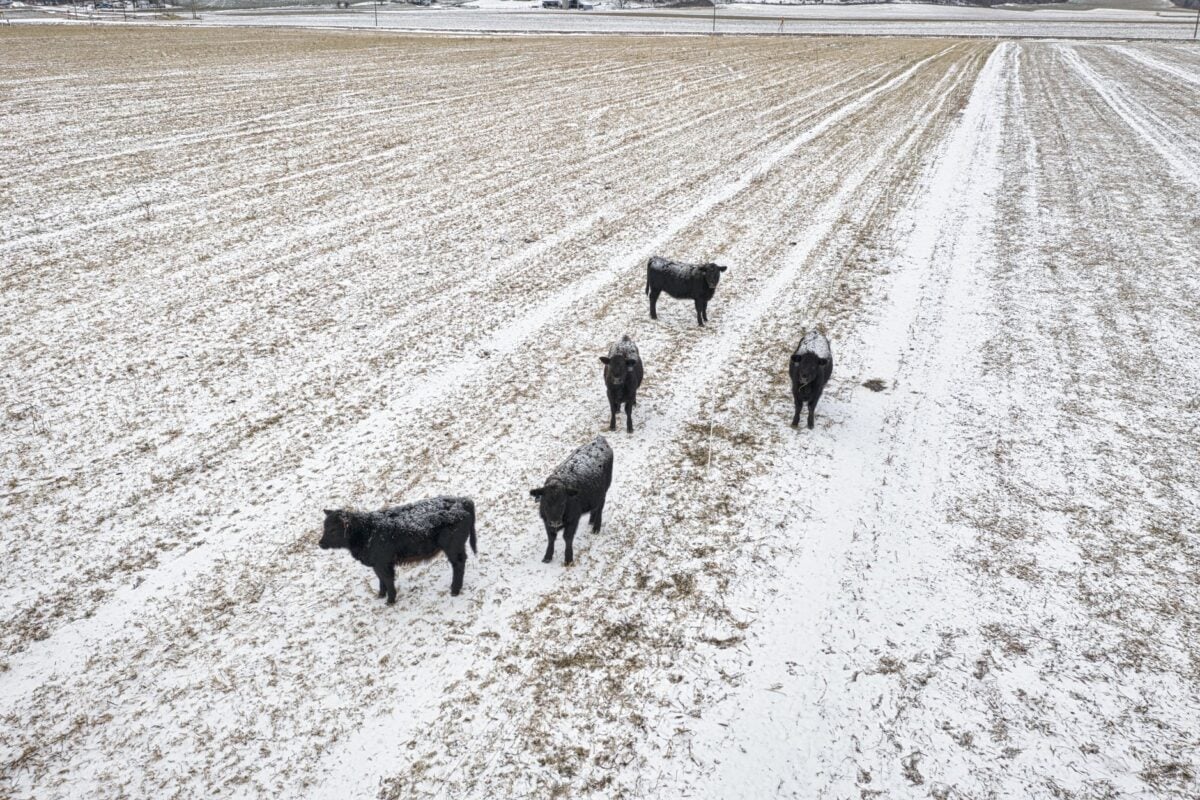
Curtis had 140 bred Angus cows on open winter wheat along the river, three miles from any real cover, and the blizzard had come in eight hours early.
Cows on open wheat do what cows have always done. They turn their tails to the wind and drift with it, slow and stubborn, until they hit something. On that pasture, the something was the south fence.
When cattle stack up on a fence in a blizzard, the ones in front get pushed into the wire by the ones behind.
If it goes long enough, the corner fills with cows, and the ones on the bottom do not get back up.
“How long have they been on the fence?” I asked him.
“Since about eight,” he said. “We’ve had three four-wheelers on them since then, me and Tanner and Lonnie and the new boy. They won’t drive. They just break and come back to the wire. Tanner about rolled his machine in the bar ditch an hour ago.”
I could hear the wind behind his voice, a long hollow roar. I could hear somebody hollering at cows that were not going to listen.
“Where are you trying to take them?” I said.
“Edith Kraus’s cedars. She’ll open the windbreak quarter and the old pens. She said she’d do it.” He stopped, and I heard him breathe. “She said she’d do it if I called you first.”
So that was it. That was why it was noon and not eight.
Edith Kraus is seventy, and she owns the quarter with the old cedar shelterbelt her father planted in the dirty thirties.
I had been renting her old farmhouse up the section road since the divorce. She does not say much, and when she does, she means it all the way down.