
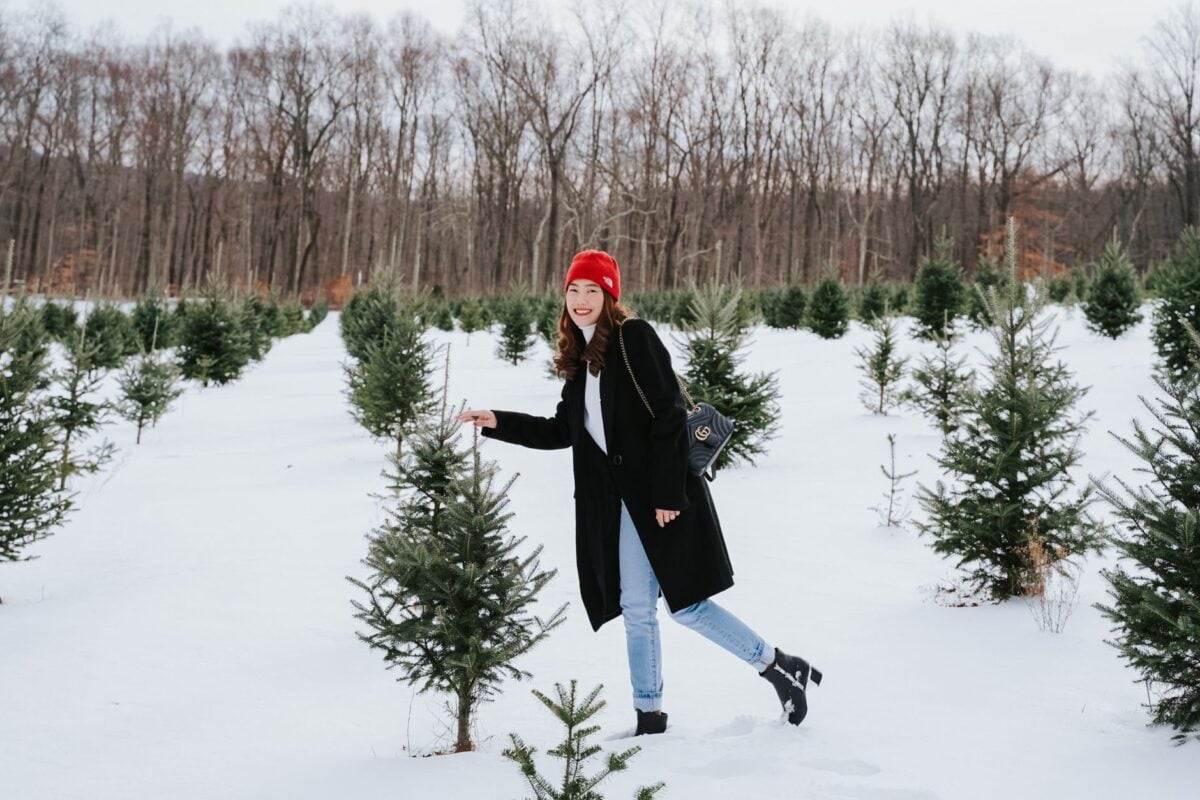
The stumps were still wet. That is the first thing I remember, how the cut tops of them shone in the morning sun like somebody had wiped each one with a rag.
I had come out to my mother’s farm that Saturday in early November to help Les winterize the pump house. I parked by the pole barn, got out, and looked up the hill the way I always did. The whole east slope was gone.
Not all of it. But the best of it. Four rows of Fraser fir and two of blue spruce, the ones my mother had planted in 2009 and 2010, the ones she had sheared every July for eight summers, were just stumps in the frost.
There was orange baler netting snagged on the fence wire. There were tire ruts through the grass lane, deep ones, the kind a loaded truck leaves. Somebody had run a chainsaw up and down those rows for most of a day.
I stood there long enough that my coffee went cold in my hand. Then I walked to the house.
Get a new story in your inbox every morning.
Facebook doesn’t show you every story we post. Our free newsletter does. Join 2,500+ readers.
Les was at the kitchen table in his flannel shirt with the newspaper folded open to the obituaries, the way he read it every morning now. My mother’s sugar bowl sat in the middle of the table. A check was tucked under the lid.
“What happened to the east hill?” I said.
He didn’t look up right away. He finished the line he was reading. Then he took the check out from under the sugar bowl lid and laid it flat on the oilcloth so I could see it.
It was from a tree lot in Grand Rapids. Twelve hundred dollars.
“Fella came up Tuesday,” Les said. “Had a crew with him. Took four hundred of the big ones. Three dollars a tree, cut and hauled, he does the work.”
“Three dollars,” I said.
“That’s what they’re worth wholesale when you need them gone.”
“Mom sold them for forty.”
“Your mother stood out there in the cold every weekend from Thanksgiving to Christmas. I’m sixty-nine years old, Megan. I’m not doing it.” He tapped the check with one finger. “Trees don’t pay for themselves.”
I set my coffee cup down on the counter very carefully, because my hand was not steady and that was my mother’s counter.
“Those trees were for the girls,” I said. “You know that. Every one of them. That was their college.”
Les folded the newspaper. He looked at me then, and his eyes were flat and tired and a long way off.
“The girls can borrow like everybody else,” he said. “I did. You did. They’ll be fine.”
I have thought a great deal about that sentence since. At the time I only heard the coldness in it. Twelve hundred dollars for four hundred trees, and two sixteen-year-old girls told to sign their names to loans.
I did not yell. I want that understood. I am a county nurse, and I have spent twenty-two years learning not to raise my voice in a room where someone is hurting, even when the someone hurting is the one doing the damage.
“Where are they now?” I asked.
“Lot on the south side of Grand Rapids. He said they’d be up by the weekend after Thanksgiving.” He put his reading glasses in his shirt pocket. “It’s done, Megan. I’m not going to argue about it.”