
I told my daughter she had traded the dirt under her nails for a title that would feed no one, and she set her coffee cup in my sink and walked out of my kitchen.
That was nine years ago last April. She has not been back through that door since.
I want to tell it straight, because I have spent nine years telling it crooked to myself. In my version I was tired, I was grieving, I was a widow of one month saying a hard thing in a hard week, and any mother might have said it.
All of that is true. It is also a way of standing in the doorway so I do not have to walk into the room.
My name is Sibylla Orcutt. I am sixty-three years old, and I run a backyard plant nursery and greenhouse in Vesper Glen, North Carolina, a town of about nineteen hundred people in the foothills, where the whole county drives out on Friday nights to sit in the cold at the high school field and eat boiled peanuts out of a paper sack.
Get a new story in your inbox every morning.
Facebook doesn’t show you every story we post. Our free newsletter does. Join 2,500+ readers.
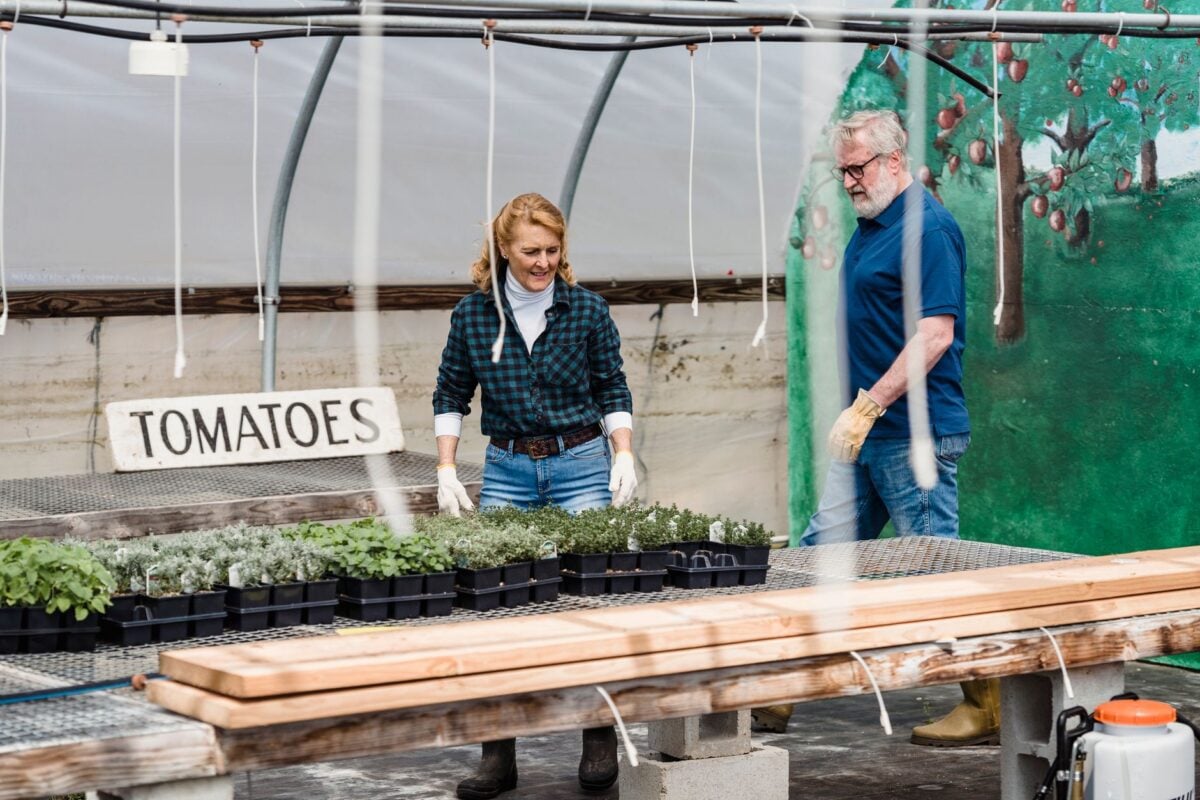
We have a feed store, a Dollar General, two churches that do not speak of each other, and my greenhouses on Dobbins Mill Road. If you have bought a flat of petunias or a tomato start anywhere within twenty miles of here, there is a good chance it came out of my back yard.
My husband Thaddeus built the first greenhouse in 1989 from storm windows he hauled off a demolished schoolhouse in Marion, and the second and third over the years after. He was not a talker.
He was a big, slow, gentle man with hands like fence posts who could graft an apple limb onto a crabapple trunk without looking down. He grew things, and I sold them, and that was the arrangement of our marriage for thirty-one years.
I handled the register, the books, the customers, and the bank. He handled the soil.
And we had one child, Camila.
She was born in a December, in an ice storm, and Thaddeus put her in a flat of seedling trays lined with a towel for her first nap in the greenhouse because it was the warmest room we had that week. I have always told that story as a funny one. I should have heard what it was saying.
She grew up between the benches. At six she could tell a tomato seedling from a pepper seedling by the first true leaf. At ten she was pricking out lettuce for pay.
At fourteen she was the one who noticed that a single plant in Thaddeus’s market tomatoes was setting fruit two weeks ahead of the others, and she tagged it with a twist tie, and she saved its seed.
That plant was a sport of Thaddeus’s grandfather’s tomato. The old man had carried the seed up out of Georgia in a tobacco tin around 1931, a big pink beefsteak that the family called the Orcutt Pink, with a flavor I have never been able to describe to anyone who did not grow up eating it.
Sweet, but with an edge, like a good tea with a little lemon in it. By the time Camila was in high school, she and Thaddeus had worked that old tomato into something better.
We sold the seedlings by the thousand every May, but never one seed of the parent line. That was Thaddeus’s rule. The market tomatoes paid our property tax every September.