
Fourteen words
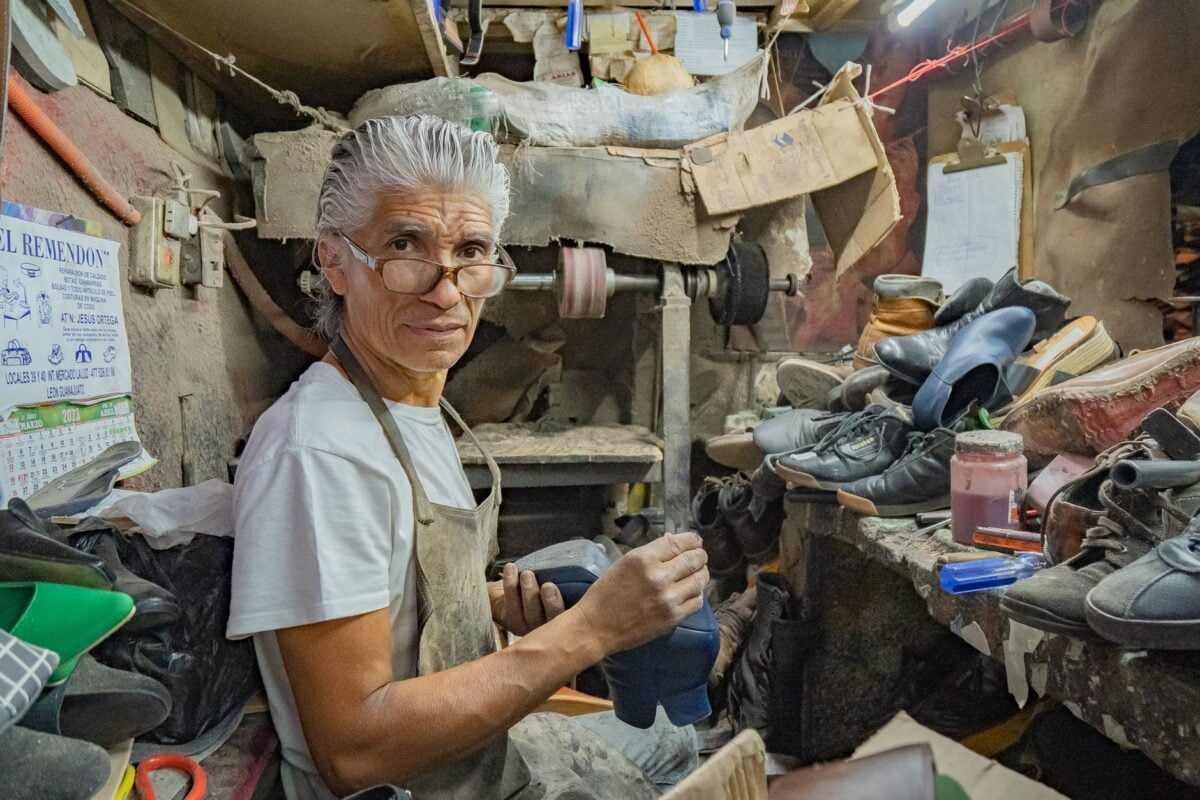
The sentence I said to my daughter across my own work bench was fourteen words long. In the eight years since, I have counted those words more often than I have ever counted money.
I will not fix the shoes of a girl who walked the wrong road.
I said it on a Friday in April, ten minutes before nine in the morning, with the finishing machine still winding down behind me. Booker sat on his stool by the space heater with a cup of my bad coffee stopped halfway to his mouth.
Renae stood on the other side of the counter holding her wedding shoes in both hands, the way you would hold a bird that had flown into a window.
They were cream-colored leather pumps with a low heel. The left heel had snapped clean off in the gravel of our lot when she stepped out of the car.
Get a new story in your inbox every morning.
Facebook doesn’t show you every story we post. Our free newsletter does. Join 2,500+ readers.
She was twenty-nine years old. The county courthouse had her name on a ten o’clock slot. She had one hour and ten minutes, and her mother was the only cobbler in Dunmore, Missouri.
“Mama,” she said. “It’s a heel. It’s a ten-minute job. I’ll pay you double.”
“Pay me nothing,” I said. “I mend shoes for people who are going somewhere worth going. Take them to Sedalia.”
She did not cry. I want that written down, because I have wished many times that she had.
She set the pumps on my counter, very gently, one beside the other. The little heel lay next to the shoe like a piece of something that belonged to neither of us.
Then she looked at Booker, who had put down his cup, and she looked at me, and she said, “Sedalia, then.”
She picked up the shoes and the heel and went out. The bell over the door rang its two notes.
I listened to her car start, and I told myself I had done a hard and correct thing.
The man she was marrying was named Teague Wilmoth. He was forty-one, twelve years older than she was, and he had been married once before, in Texas.
He had a drunk driving charge on his record. He worked a crew that set power poles for the electric co-op, which meant he came home smelling of creosote and diesel. He did not go to church.
He had been in my shop twice, once to drop off lineman’s boots with the shank rotted out and once to pick them up. I had done the work right and charged him double and never looked at his face.
That was everything I knew of him, and I thought it was enough.
I had raised my daughter in the Methodist church, on the piano bench. She taught second graders to read, and on Sunday afternoons she played hymns for the ninety-year-olds at the Pine Ridge nursing home.
I could not stand to watch her hand all that to a man who, as I saw it, had already thrown away one wife.
I was afraid. Anybody honest, looking at that Friday, would call it fear. But I did not call it fear. I called it standards, and I dressed it in a sentence, and the sentence did exactly what I wanted.
It closed the door. What I had not understood is that you cannot choose which direction a closed door swings.