
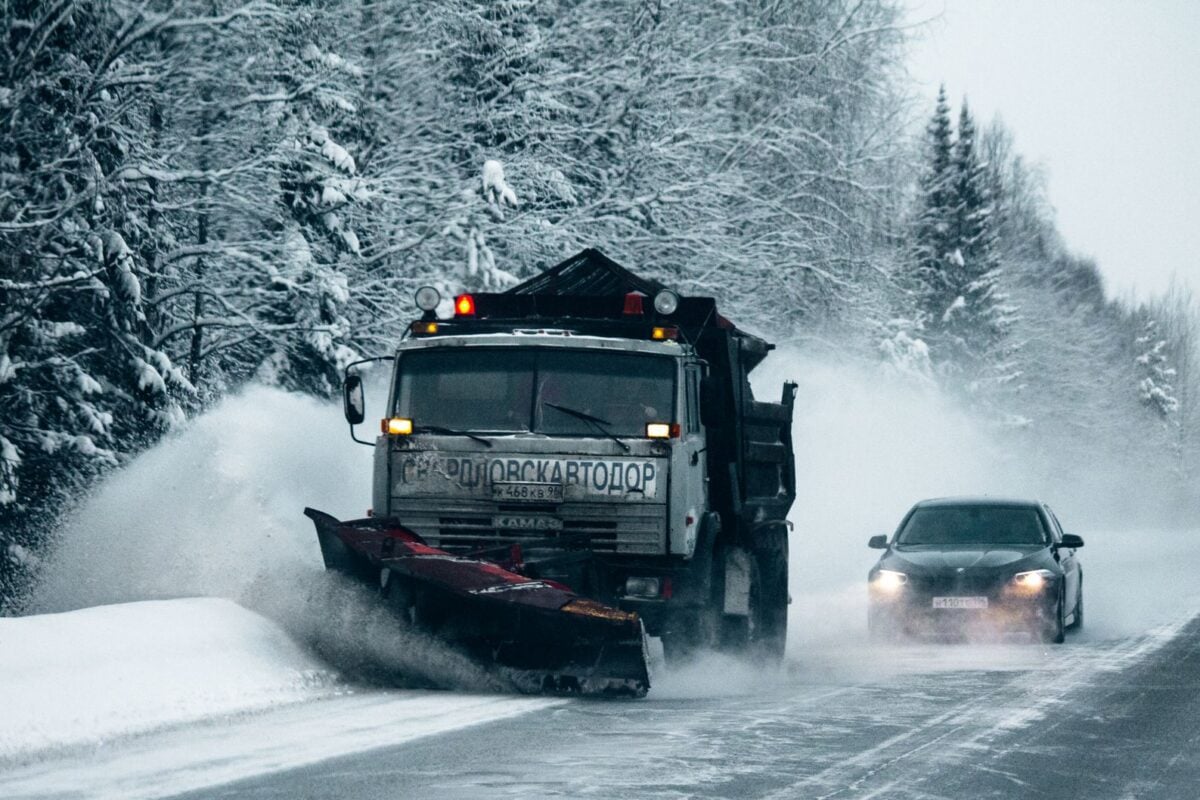
The yard light was out. That is the first thing I want you to know, because it is the thing that turned me from a man doing a chore into a man standing on a porch he had not stood on in ten years.
It was the third week of February, a little before three in the morning, with a northwest wind driving the snow sideways across Hoyle Road and eleven below on my dash.
I had been awake since a quarter past two, when the scanner on the nightstand started up. I have driven a county plow for thirty-one winters, and I do not sleep through a forecast like that.
I lie there and listen to it arrive.
I did what I did every storm. I dressed in the dark so I would not wake Marcene, ate toast standing at the counter, and went out to my own pickup, the old Ford three-quarter-ton with the Fisher blade hung on the front.
Before I took the county’s big International out on my route, I drove a quarter mile east and turned in at the lane of Elwin Tollefson, and I plowed it first.
Get a new story in your inbox every morning.
Facebook doesn’t show you every story we post. Our free newsletter does. Join 2,500+ readers.
First. Before my own, before the county’s. For seven winters, every storm that dropped more than three inches, Elwin’s lane got cleared before anybody else’s on that road, and nobody had asked me to.
I am going to tell you why, and I am not going to flatter myself, because the why is most of this story.
But that morning the yard light was out. In seven winters I had never come up that lane and found the pole light dead.
Elwin was a man who kept things running, a block heater on every engine, a spare belt for every belt. The kitchen window was dark too.
Usually a square of yellow sat in it, because Elwin was up before the storm was, same as me.
I plowed the lane anyway. Quarter mile in, blade angled right, throwing the snow into the field the way he liked it. I made my turn in the yard, a wide loop around the old Farmall parked by the machine shed, and I came back past the house with my eyes straight ahead like they were bolted there.
That morning, at the bottom of the loop, I looked.
The dog was in the kitchen window. Elwin’s old heeler, Jimmer, up on his hind legs with his front paws on the sill, barking at the glass.
No sound came through the wind, but I could see his whole body working. A dog does not stand like that for nothing.
I put the truck in park and sat for close to two minutes, with a county route waiting. I told myself the old man was asleep.
I told myself that if I knocked he would look at me the way he had looked at me across a church parking lot, across the Co-op counter, across a fence, for ten years.
Then Jimmer put his head back and howled. I heard that one through the glass.
I got out of the truck.