
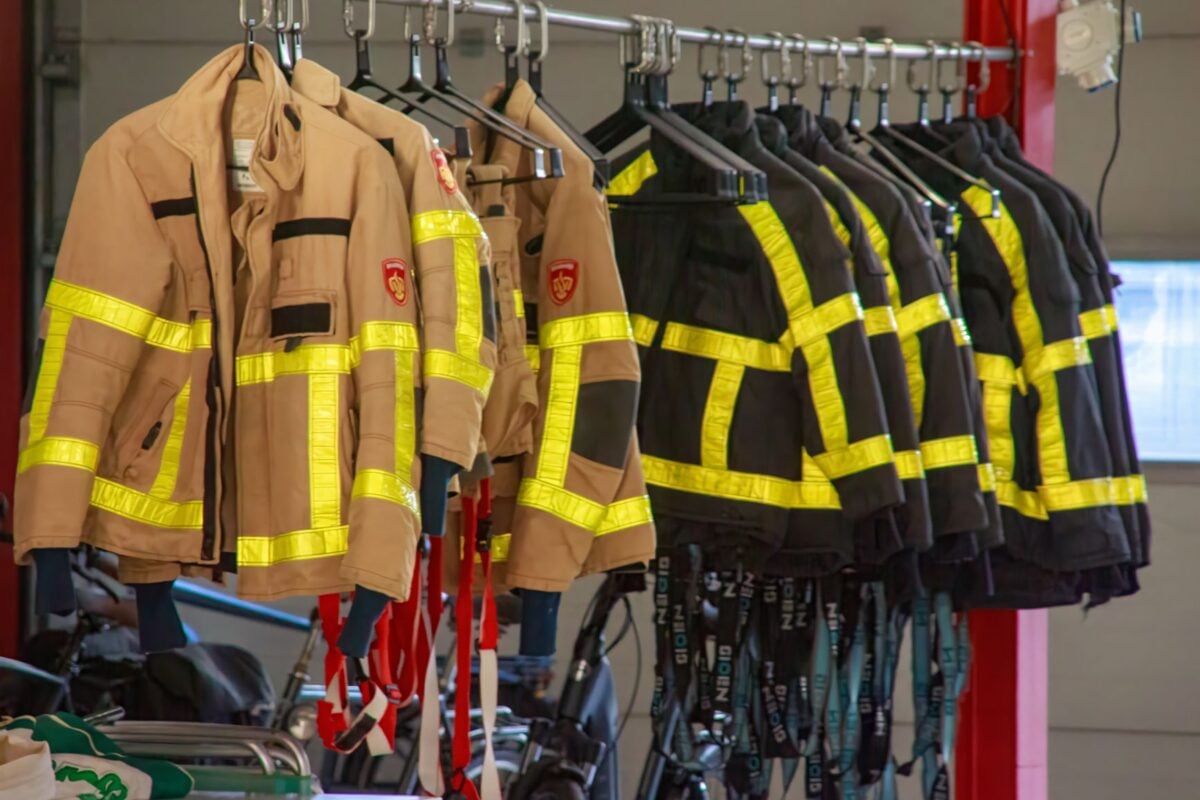
The morning after the Tuckett barn burned, my son set his helmet on my counter and I told him what a Pell does.
Not my kitchen at home. The kitchen at the Oak Verge firehouse, the long steel one with the forty-cup percolator and the flat-top griddle the Lions Club bought us in 1996.
It was a quarter to seven on a Sunday and I had four pounds of bacon going, because a crew that has been up all night eats before it sleeps. That was my job. It had been for two years by then, since my heart doctor put three stents in me and the department doctor wrote “restricted” next to my name.
Over the pass-through hung a pine board my father had burned a saying into with a hot iron in 1971. I looked at it every Sunday and did not see it anymore, the way you stop seeing a nail in your own wall.
Colt came through the back door with soot still in the creases of his neck. He was twenty-eight years old. He had his coat over one arm and his helmet in his hand.
Get a new story in your inbox every morning.
Facebook doesn’t show you every story we post. Our free newsletter does. Join 2,500+ readers.
He walked straight to the counter where I stood and set the helmet down on the steel like it weighed forty pounds.
I did not look up from the bacon. I said, “Where were you.”
I want to be exact about this, because I have gone back over it more times than I have said the Lord’s Prayer. I did not ask what happened. I did not ask if he was hurt. I asked where he was, the way you ask a hired man who has left a gate open.
Colt said, “I couldn’t get to him, Dad.”
There were nine men in that kitchen. Cutler Banning was at the table with his boots off. Brantley Voss stood at the coffee urn with both hands around an empty cup, and he looked at my son and then at the floor.
Chief Dallas Benning was in the doorway to the bay, gray in the face, and I saw him open his mouth.
I said it before he could. I said, “A Pell does not stand in the yard while a man burns.”
I said it flat and low, the way my father said it to me. I did not shout. A man who shouts can be shouted back at. I said it like scripture, like it was carved over the door.
Colt looked at me for a long time. His mouth moved once, as if he had a sentence and was deciding whether it was worth the trouble. Then it closed.
He hung his coat on the third hook from the end by the back door and laid his gloves on the shelf above it. Then he picked up his keys.
He did not take the helmet. I looked at it on my counter all day.
My wife Idella stood in the doorway of the dining room with a dish towel in her hands. It was not anger on her face. It was the face she made when our dog was hit on County Road 9 and she knew before she got to the ditch.
Colt went out the back door. The screen banged. I turned the bacon.
That is how I lost my son. I did not lose him in a fire. I lost him with a spatula in my hand, in front of nine men, over a thing I did not see.