
My phone buzzed against my leg during the last verse of the closing hymn at the early service, and I let it go.
It buzzed again before the benediction, so I stepped out onto the church steps into a hard west wind and answered it.
It was my cousin Rusty. He did not say hello. He said, “Leif, I left your heifers at the sale barn yard in Gillette. They’re in the back pens. You’ll have to figure out the rest.”
I stood there with my hat in one hand and the phone in the other.
“What do you mean, you left them,” I said. “You’re supposed to be halfway to Broadus by now. You’re supposed to have them on the lease by two o’clock.”
“I got a call for a load out of Belle Fourche that pays five thousand,” he said.
“Somebody’s truck broke down and they need calves moved tomorrow. I can’t pass that up. I’m already past Moorcroft, and I’m not turning around.”
Get a new story in your inbox every morning.
Facebook doesn’t show you every story we post. Our free newsletter does. Join 2,500+ readers.
Rusty had backed his cattle pot up to our loading chute at four o’clock that morning, under the yard light, while Sigrid held the flashlight and I worked the alley.
Fifty-eight bred heifers went up the ramp into that trailer in the dark, and I had stood in the wind and watched his taillights go up the county road.
“Did you call ahead to the barn?” I asked him. “Is somebody feeding them? Is there hay in that pen?”
“There’s water in the tank,” Rusty said. “It’s a stockyard, Leif. They hold cattle overnight all the time. You’ll be fine.”
Then the line went quiet, and when I called back it rang four times and went to his voicemail.
Sigrid came out the church door with her purse on her arm and my coat over it.
She looked at my face and did not ask me anything. She just held the coat open, and I put my arms in it while I told her.
What those heifers were
People who do not run cattle sometimes think a heifer is just a cow.
A bred heifer is a young female carrying her first calf, and on a small place like ours she is the whole future walking around on four legs.
Those 58 were the best of our own calf crop from two springs before.
Sigrid and I picked every one of them out of the bunch ourselves, by eye and by the records, and kept them back instead of selling them as yearlings when the money would have helped.
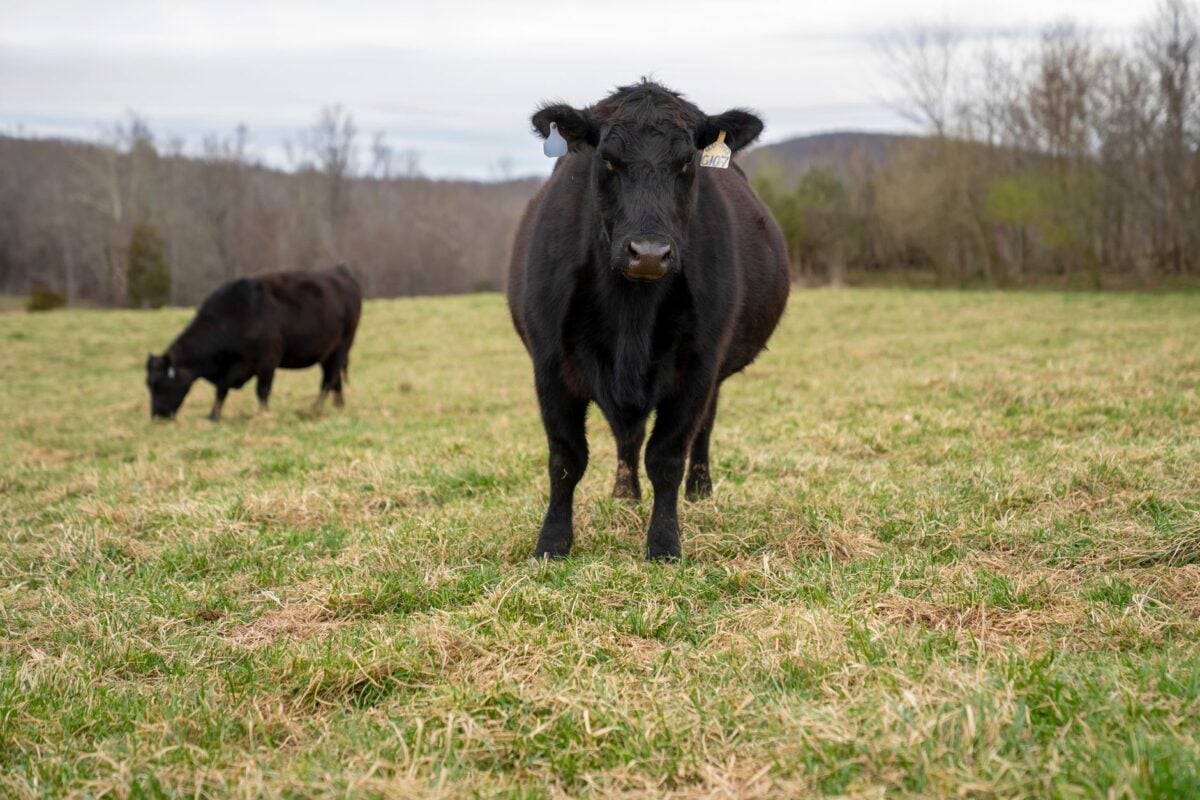
They were black Angus, bred in June to a calving-ease Angus bull we leased from a neighbor, and due to start calving the middle of March.
They weighed about 850 pounds apiece that fall, and they were in good shape, because we had kept them that way.
Bred heifers were bringing around $3,500 a head that fall at the sale barns.
Fifty-eight of them was more money than our house was worth, and most of what was left of the bank’s patience with us besides. It was the next ten years of our place.
We run a small cow-calf outfit in eastern Wyoming, a little under two hundred mother cows when the grass is good.
The grass had not been good. The summer had gone dry in June and stayed dry, and by September our winter pasture looked like a parking lot.
So in October we had leased winter grass up in Montana, on a ranch north of Broadus along the Powder River, from a family who had more grass than cattle that year.