
At twenty minutes to seven on the ninth morning without water, a flatbed truck turned in at my mailbox with a boring rig chained to its back, and the first thing I did was look at my kitchen sink.
I do not know why. It had been dry for nine days. I had stood at it every morning anyway, like reaching for a light switch in a house where the power is out.
The truck came down my gravel lane slow, with the rig shivering on its chains. Behind it came a pickup, and another, and another, all the way back to the county road. Tailgates down. Coolers in the beds. Shovels standing up like a field of metal weeds.
Del was driving the first truck. He lifted two fingers off the wheel at me, which is how Del says good morning, and pulled into the side yard.
I stood on my back step in my housecoat with a quart jar of water Corah had filled for me the day before. By half past eight there were thirty men in my yard, and I had not asked a single one of them to come.
Get a new story in your inbox every morning.
Facebook doesn’t show you every story we post. Our free newsletter does. Join 2,500+ readers.
To tell it right, I have to go back eleven days, to a Tuesday morning and a loud noise.
The well Curt dug
My name is Ollie Vann. I am seventy-one, and I live on eleven acres at the end of Bluff Road, outside Two Rivers Bluff, Missouri, where a river and a creek run together at the foot of a limestone ridge.
My husband Curt and I bought the place for nine thousand dollars the spring we married. It came with a tin-roofed house, a chicken house, and a pump shed. It did not come with a well.
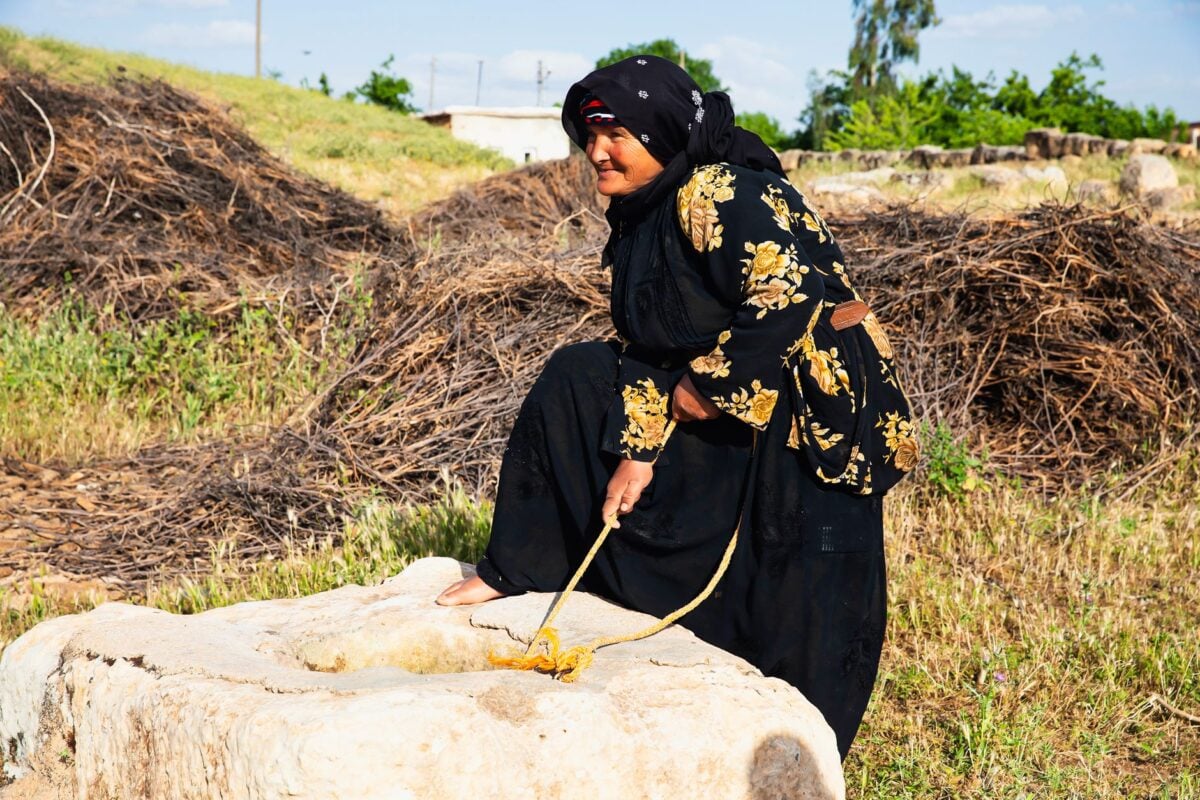
Curt dug one. He was twenty-six and had never dug a well in his life. He did it with his brother Earl, a borrowed windlass, and a galvanized bucket, every evening after his shift at the shoe plant through one hot July. I was twenty-two, and my whole job was the rope.
On the thirty-first night, Curt hit water at forty-four feet. I felt the rope go slack and then jerk twice, which was our signal, and I hauled the bucket up hand over hand with my heart going like a hen’s.
He came up the ladder behind it, mud to the eyebrows, grinning like a boy who has stolen a pie, and held a tin cup out to me.
“Taste that,” he said.
It tasted like a clean nickel and a cold stone. It tasted like the beginning of our life together.
Earl and Curt lined the hole with concrete tile, and Curt hung his bucket on a nail on the post. For forty-nine years that well never once failed us. We raised two children on it.
Curt died four years ago in February. Heart, in the pump shed, with a wrench in his hand. The last thing he had done was fix the pressure switch on the well.
I stayed on the place, a woman alone, a mile and a half from the nearest neighbor. I had my hens and my garden and Curt’s well. As long as the water ran, he was not completely gone.
I live on thirteen hundred and twelve dollars a month from Social Security. In the bank I had twenty-one hundred and forty dollars. I tell you those numbers so you will understand what came next. I was not a woman with a cushion. I was a woman with a well.