
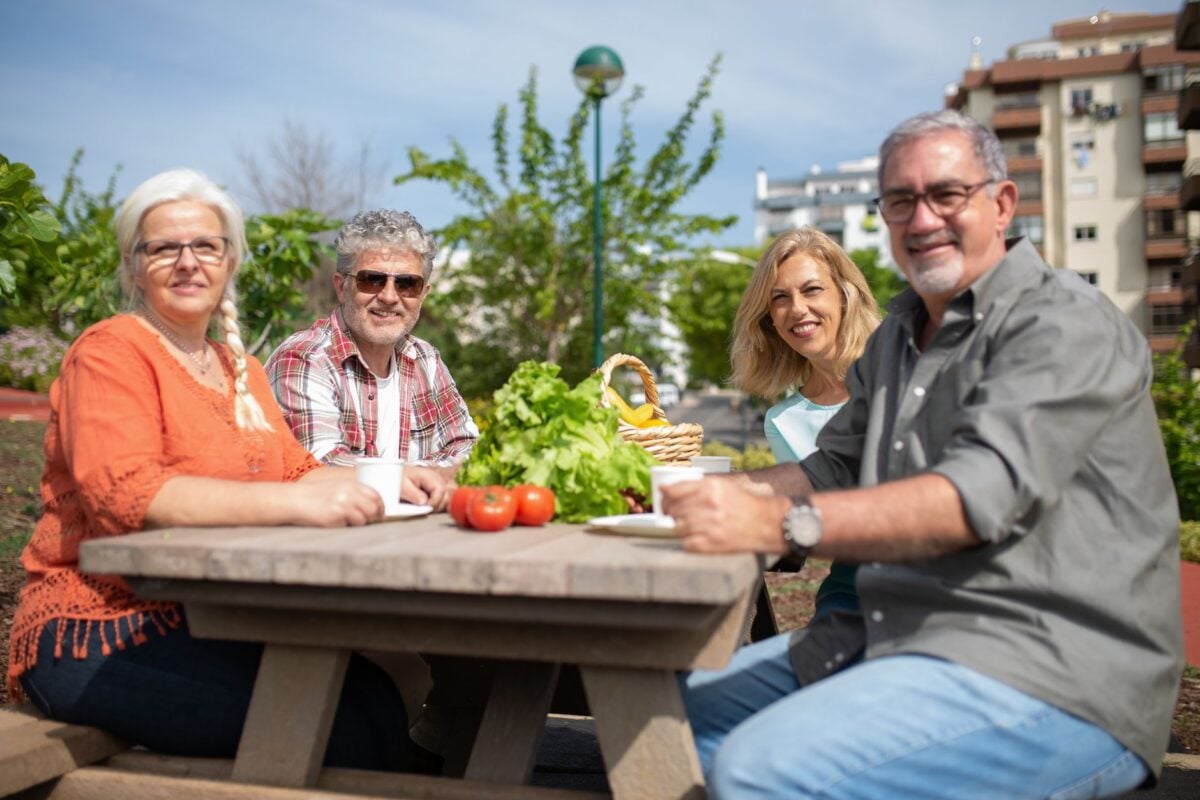
On Thursday afternoon, a county truck pulled up beside the pavilion in Fork Park, and a man in a reflective vest stapled a yellow notice to the post where we hang the menu board.
I was forty feet away, wiping down the serving tables for Sunday, three days early, because that is the kind of woman I am. I like things ready. I watched him staple it four times, one staple at each corner, like he was afraid it might blow away and let somebody off the hook.
Then he got back in his truck without looking up, and I walked over and read it.
Get a new story in your inbox every morning.
Facebook doesn’t show you every story we post. Our free newsletter does. Join 2,500+ readers.
It said that any food service on city park property in Willard Fork was suspended, effective immediately, pending review of the applicable event permit. It said the pavilion and its grounds were reserved on Sunday from noon to six for a private rental. It said my name, Treas Spangler, and the words “cease and desist,” and it was signed by a man I had known since he was a boy.
I am sixty years old. I have fed people in that park on Sunday for eleven years. I have never been served a piece of paper in my life, unless you count a casserole dish somebody forgot to claim.
Here is what the paper meant. On Sunday at noon, about a hundred people who count on that plate were going to come across Mill Street with their cane tips tapping and their good shoes on, and there would be nothing there for them.
My name is Treas Caudill Spangler. I live a mile and a half up Dry Branch Road in Willard Fork, Kentucky, in the house my husband Luther and I bought the year our son started kindergarten. Willard Fork has about two thousand people, one stoplight, a feed store, a Dollar General, and a high school football field that outshines the town hall.
Eleven years ago the shirt plant closed. If you have never lived in a town where the one plant closes, I cannot explain it in a paragraph. In the span of one Friday, three hundred and twelve people went from a paycheck to a porch. The Sunday after, when church let out, Luther stood in the gravel lot and said, “Treas, I don’t believe anybody in this town is eating a hot dinner today.”
He was a man for doing the next thing. He hauled his smoker out of the barn, a fifty-five gallon drum on a trailer that he had welded himself, and he smoked two pork shoulders. I made beans and a pan of cornbread. We carried it to the park pavilion, because the church fellowship hall holds sixty and the pavilion holds a crowd, and we put up a card table.
Thirty-six people came that first Sunday. I counted, because I count everything. I have a little tally clicker that used to belong to the church ushers, and I click it for every plate.
I prayed a blessing over that card table in a voice that shook so bad Luther took my elbow. It has been the same blessing ever since, and I will give it to you, because it matters later.
“Lord, we have more than we need and less than we think. Bless this food and the hands that made it. Make room at the table. Amen.”
That is all. It takes ten seconds. I have said it over the line more than five hundred times, with my eyes shut, and every time I open them there are more faces than I was ready for.