
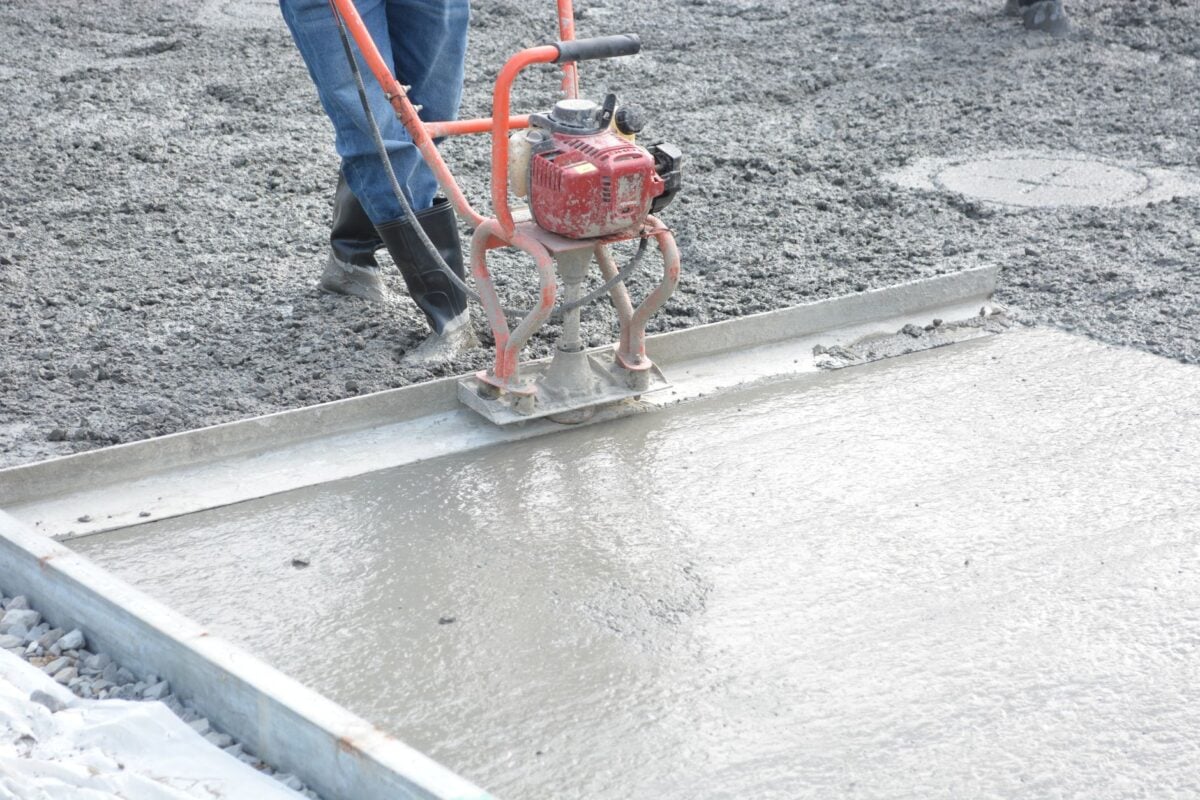
The ruts ran almost the whole length of the new walk, two of them, each one deep enough to lay my forearm in.
They started at the old driveway apron, ran down the street side of the slab, and swung back across it at the far end.
Brody was kneeling at the edge of the form boards with his hands on his knees. He did not touch the concrete.
He knew better than to touch it. He just looked at it the way you look at a dog that has been hit on the highway.
The stakes on the street side had been kicked out of line. One of the two by fours was cracked through at a nail.
Get a new story in your inbox every morning.
Facebook doesn’t show you every story we post. Our free newsletter does. Join 2,500+ readers.
Where the tires had pushed down, gray paste and gravel had squeezed up over the form boards and dripped into the boulevard grass.
Across the walk, Ilse Brandvold stood in her front door with her cane in one hand and the cordless phone still in the other.
She was seventy-four years old, and she had called me eleven minutes after it happened, which was as fast as she could get to the phone.
“I saw the letters on the door,” she said. “I am sorry, Wynne. I saw them plain as day. I knocked on the window, but he did not look up.”
I did not have to ask her what the letters said. There is only one pickup in town with a ladder rack and the name Rasmusson painted on both doors in red, and I was married to the man who owns it for seven years.
My name is Wynne Halvorsen. I am forty-five, and I have finished concrete for a living since I was nineteen, the same age Brody was that afternoon.
My dad taught me on driveways and hog barn floors all over Otter Tail County.
That sidewalk was Brody’s first job under his own name. He bid it himself, pulled the city permit himself, and wrote it up on a bid sheet with his own name across the top, Brody Halvorsen, in handwriting that still slanted like a schoolboy’s.
It was sixty feet long and four feet wide, four inches thick, a little under three yards of concrete.
He bid it at three thousand dollars to tear out the old walk, haul it, form, pour and finish. That is a fair Minnesota price, and I told him so.
His father had driven his three-quarter ton pickup right down the middle of it about an hour after we finished troweling.
I knew why, too. That was the part that made my hands go cold inside my gloves.