
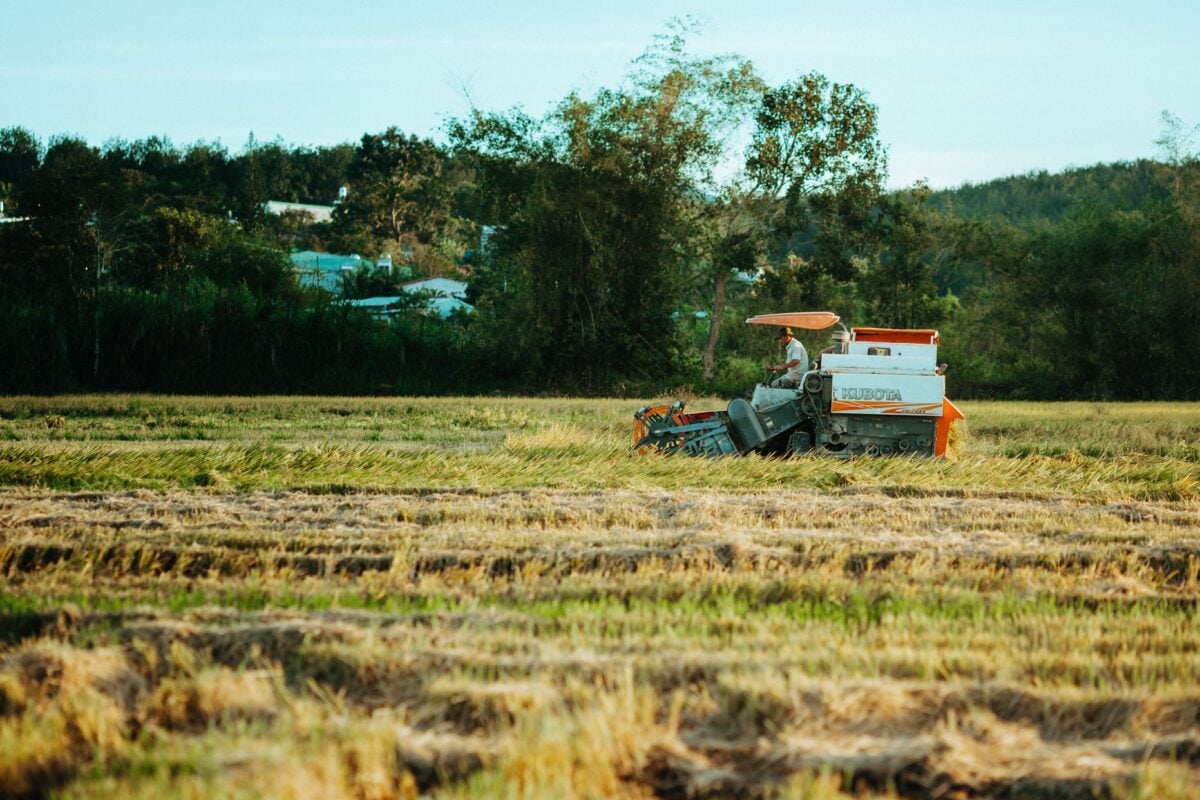
The water was already over the toes of my boots when I stepped off the turn row. Brown water, moving, running across a field we had drained dry a week before.
I stood there and listened to it. If you have never stood in a rice field in September, you would not think water could make that much noise. It was talking the whole way down the levee.
It was a little after six on a Tuesday morning, early September, on the Grand Prairie south of Stuttgart. The sun was just up over the tree line along the bayou and it was already hot.
I had only stopped by on my way to work. I am a nurse aide at the care home in town, and I like to drive the levees before my shift. Wes says I count rice heads the way other women count money.
That morning I did not have to count anything. I could see it all from the truck. The top two paddies were shining like a parking lot after a rain, and the shine was spreading.
Get a new story in your inbox every morning.
Facebook doesn’t show you every story we post. Our free newsletter does. Join 2,500+ readers.
Our rice was ready. You could hear it when the wind moved, a dry, papery hiss. The heads were gold and heavy and bent over, the way they get about a week before you cut.
A week. That was all we needed. A week more of sun and the combines would roll, and a whole year of work would go into the bins.
I called Wes. He was at the shop greasing the combine. I said, “You need to come look at the top of the field,” and he did not ask me why. He heard it in my voice.
He was there in six minutes. I watched his truck come down the gravel too fast, and I watched him get out and stand on the levee and put both hands on his hips. He did not say anything for a long time.
Then he walked up the line levee toward the top of our field, where it meets the field above us. I followed him. The water got louder the closer we got.
At the corner there is an old spill, a metal box set into the levee with slots for boards. Back when Wes’s daddy farmed both fields as one place, that spill let water down from the top field to ours.
When the place was split, that spill was boarded shut and packed with dirt. It had been shut for eleven years. Nobody had touched it since Wes and I bought our part.
That morning every board was out. They were lying on Dwight’s side of the levee, stacked neat, the way a careful man stacks things. And the water from Dwight’s field was pouring through that box like a creek.
Up the slope I could hear his well running. A big diesel pump has a sound you know in your chest. It was pumping fresh water into his top paddy, and his top paddy was sending it straight to us.
Wes stood over that box a long time. Then he said, very quietly, “He pulled his boards.” He looked up the levee toward Dwight’s house. “Every one of them.”
I need to tell you who Dwight is, because none of this makes sense unless you know.