
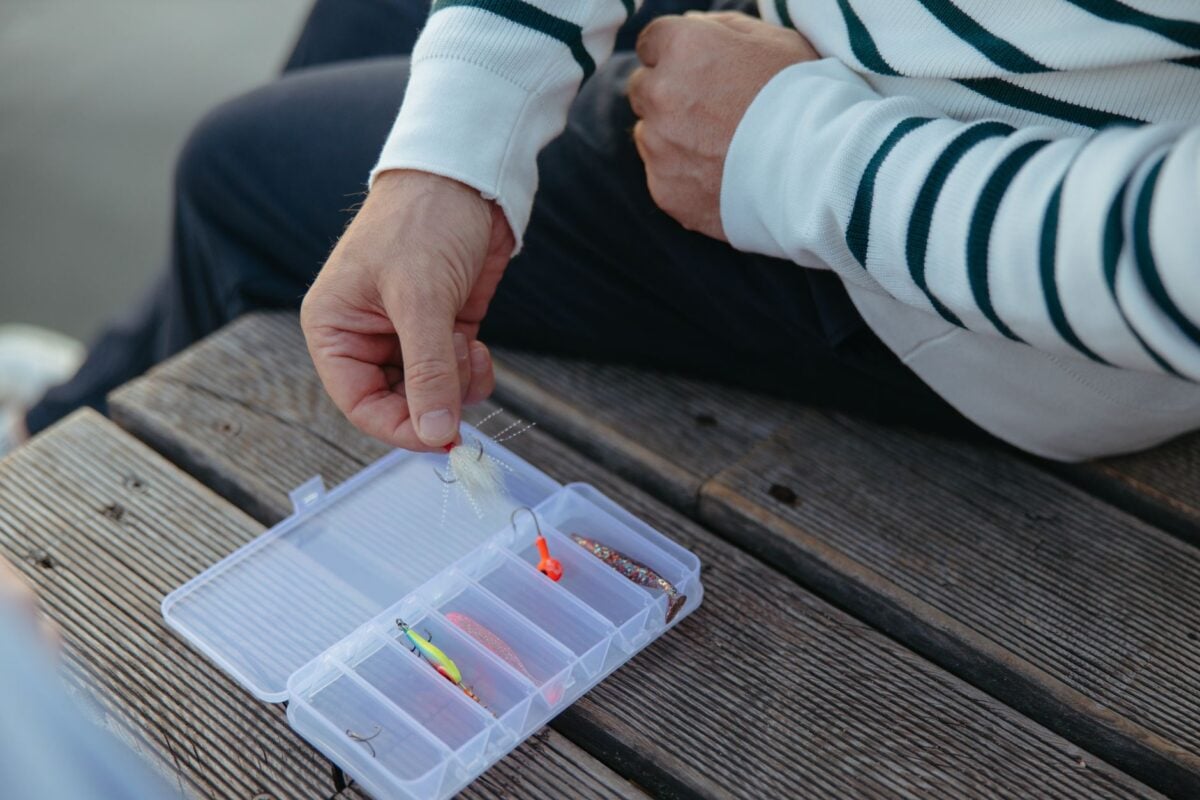
Karen was the one who found the tackle box, but I was the one who opened it, and I have thought since that those were exactly the right jobs for each of us.
It was the second Saturday after we buried Otha. My daughter had driven down from Lexington with my grandson Caleb to help me start on the garage, because I had told her twice on the phone that I was fine and she had decided that was the sound of a woman who was not. She was right. I was eighty years old, I had been married to one quiet man for forty years, and I had not set foot in his garage since the evening I drove him to the hospital.
“Mom, where do you want the fishing things?” she called from the back. “Caleb wants the rods. He’s twelve. He thinks Grandpa left them to him personally.”
Get a new story in your inbox every morning.
Facebook doesn’t show you every story we post. Our free newsletter does. Join 2,500+ readers.
“He did,” I said. “He said so in the truck once. Bring me whatever’s left.”
She came out carrying the green metal tackle box with both hands. It was older than Caleb’s mother, the corners rusted orange, Otha’s initials scratched into the lid with a nail. He had carried that box to Lick Creek every Saturday of my married life, and to wherever he went every June ninth, when he would take the truck at six in the morning and come home at noon and tell me the fish weren’t biting.
I set it on the workbench. The latch stuck, the way it always had. The top tray lifted out on its little hinged arms and showed me what I expected: spinners, a coil of line, a ladybug bobber Caleb had given him, the pocketknife with the yellow handle, a roll of butterscotch candies half gone.
“That’s it?” Karen said. “Just fishing stuff?”
“That’s what I’d have said.”
But the tray didn’t sit flat. I have lived with a practical man long enough to notice a thing that doesn’t sit flat. I lifted it all the way out.
Underneath was a bread bag. An old Sunbeam bread bag, folded over twice and held shut with three rubber bands gone brittle and sticky. Inside the bag were three notebooks. The top one was a green hardcover with a cloth spine. The one under it was black, with a cracked binding. The bottom one was a tan spiral steno pad, soft as cloth from handling, with the cardboard cover gone gray at the corners.
I opened the steno pad. On the inside cover, in the square printing Otha used to label everything from seed packets to the fuse box, it said:
March 1986. If you are reading this I am either dead or you are nosy. Either way, this is between me and Him.
And below that, smaller:
Not for anybody’s eyes. But I reckon You can see it anyway.
I put my hand flat on the workbench. Karen said, “Mom?” and I said, “Give me a minute, honey,” and I heard her steer Caleb out into the yard, the way her stepfather would have done.
I turned the page.
Mar. 9, 1986. Karen’s fever is 104 and the doctor says it has turned to pneumonia. They have her at the hospital in Glasgow in a bed with rails. Phyllis asked me in the waiting room to say a prayer out loud for the girl. I opened my mouth and nothing came. Same as when I was nine and had to read the Psalm in front of the Sunday school. The word sits there and will not come over my teeth. Phyllis looked at me and I could see what she thought. I went and got coffee so I would not have to stand there.