
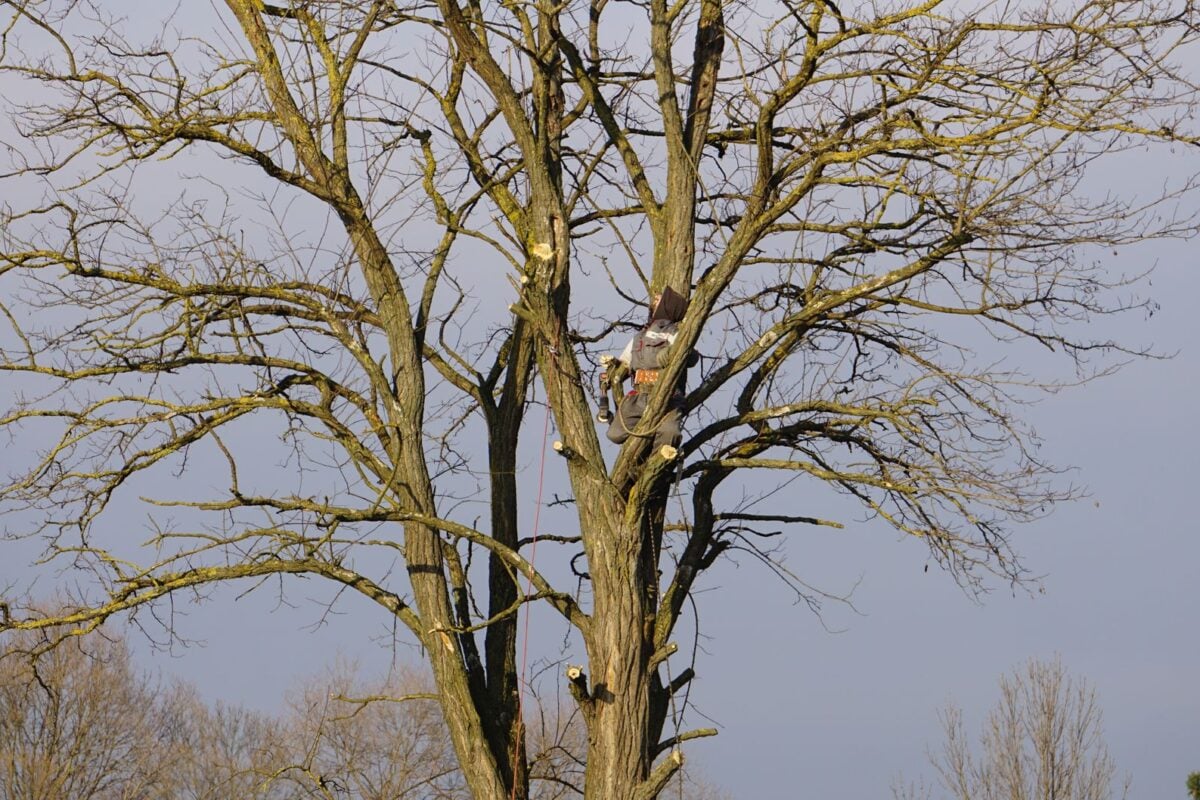
Vance Holloway pulled up at Opal Kimbrough’s curb at twenty after ten on a Tuesday morning, and he did not look at me once.
He walked straight across the snowy yard to my groundman and held out his hand.
“Keys, son,” he said.
Tully Akers is twenty-four years old. He had the lowering rope in one glove and a cup of gas station coffee in the other, and he looked at me over Vance’s shoulder like a boy asking his mother if it was all right to answer a stranger.
The bucket truck sat at the curb with the boom folded down in its cradle. We had driven it over from Vance’s shop at seven that morning.
We had set the outriggers on plywood pads, and we had been waiting on the sun to burn the ice off before we put anybody in the air.
Get a new story in your inbox every morning.
Facebook doesn’t show you every story we post. Our free newsletter does. Join 2,500+ readers.
“Vance,” I said. “We’re on a job.”
“I can see that.” He still did not look at me. He kept his hand out to Tully.
“Shad’s got fourteen broken oaks on a place out past the lake, and his rental fell through. He’s paying nine fifty a day. You’re paying six fifty.”
I want to be fair to Vance here, because I have had nearly a year to think about it.
Storm work in eastern Oklahoma pays triple for about one week a year, and Vance had lived through enough lean winters to know that week does not last.
He was sixty-four. He had run his own tree outfit out of Okmulgee for thirty years before his knees gave out, and the bucket truck was the last good thing he owned from it.
He rented it out by the day and ran it himself when the money was right.
The money was right across town. I understood that. What I could not understand, then or now, was the thing sitting on Opal Kimbrough’s roof.
It was half a pecan tree. The ice storm had come through on Saturday night, a full inch of glaze on everything in the county, with a dusting of snow over the top of it on Sunday, and around two in the morning the big pecan in Opal’s side yard had split right down the middle.
One half still stood. The other half, a leader as thick as a man’s waist and better than forty feet long, had laid itself across her roof right over the back bedroom.
It had not come through the ceiling. It had cracked the decking and pushed two rafters, and it was resting there with all that wet wood and all that ice.
Opal is eighty-one. She had been sleeping in her recliner in the front room for three nights, because she could hear the roof creak over her bed every time the wind moved the crown.
Her son lives in Tulsa and had already been down once with a tarp, but there is not much a tarp does for a tree.
“Vance,” I said, “the weatherman’s calling for freezing rain again Thursday night. If that limb picks up another half inch of ice, it’s coming through her ceiling.”
“Then call me Thursday morning,” Vance said.
Tully looked at me one more time. I nodded. He set his coffee on the hood of the truck and dropped the keys into Vance’s hand, and I will never forget how quiet that was.
Vance climbed up in the cab, brought the outriggers up, and pulled away from the curb.