
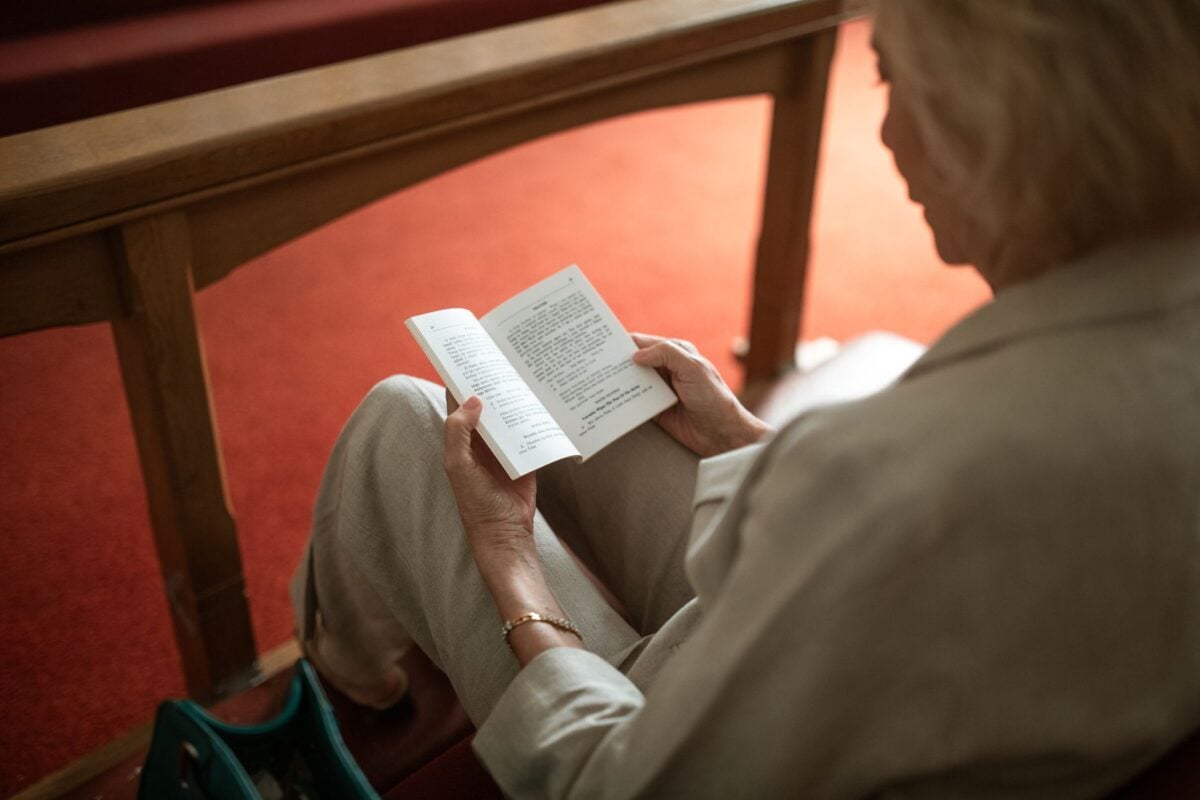
On the second Sunday of October, at ten minutes to nine, I sat down in the third pew on the left side of Harmon Community Church and did something I had not done in twenty-six years.
I did not write my son’s name on the prayer card.
The card was in the pew rack where it always is, a little white rectangle with a pencil on a string. I held it a long time. Then I put it back, blank, and folded my hands over my purse.
Ruthie sat down beside me and looked at the empty card and then at my face. She did not say anything. She put her hand over both of mine.
I should explain what that card meant, because nobody who wasn’t there for it could know.
Get a new story in your inbox every morning.
Facebook doesn’t show you every story we post. Our free newsletter does. Join 2,500+ readers.
Every Sunday since the third week of March in 1999, I had written one line on that card. It went to Doris in the church office, and Doris typed it into the bulletin under “Remembering in Prayer.” It read the same way every week.
“Perry, wherever the road has taken him, and the road home.”
That was all. No last name. No story. Just a name in a column between somebody’s hip surgery and somebody’s boy in the Navy.
My name is Inez Alsup. I am 71 years old. I have lived my whole life in Harmon, Iowa, and I have buried a husband, both my parents, and more friends than I like to count.
I never buried my son. For twenty-six years I could not have told you if he was alive, except that I would have felt it, and I had decided I would have felt it.
That Sunday was the 1,387th. I know because I counted, one winter, with a calendar and a pencil. I did not want to be a woman who only guessed how long she had been faithful.
I am going to tell it in order. It starts with my husband’s boots by the back door.
My husband was Owen Alsup, and he farmed eighty acres two miles east of town on a gravel road, and he was the kind of man who said less than he meant. He died on a Thursday in March of 1999, in the machine shed, with a socket wrench still in his hand. He was fifty-one. His heart simply quit.
I found him at noon when he did not come in for dinner.
Our son Perry was twenty-two. He was working in Omaha that spring, welding for a company that built grain bins, and he had been there six months. Perry had left the farm that fall, and it had not gone well.
Here is the part I have prayed about more than any other. I will say it plainly, because I have said it to God plainly for a long time.
The Sunday before Owen died, Perry came home for dinner and told his father he was not coming back to the farm. He wanted to build something that was not dirt and weather and debt. Owen sat quiet through the roast. Then, standing at the back door with his cap in his hand, he said it.
“If you leave, don’t expect a place here.”
Perry looked at him. Then he picked up his keys, kissed me on the cheek, and drove to Omaha without finishing his pie.
That was the last time they spoke.
On Wednesday night, the night before he died, Owen sat on the edge of our bed pulling off his socks. He said, to the floor, “I said it wrong, Inez.”