
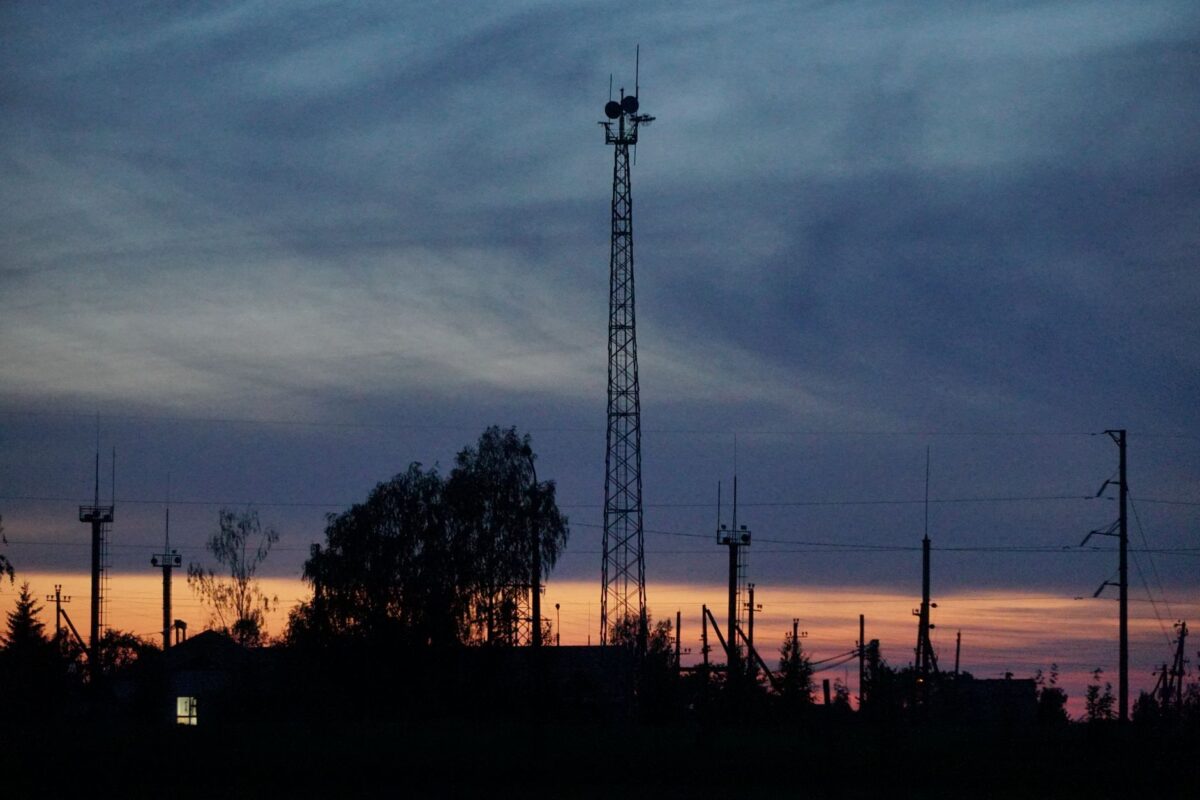
The tower was lying across Florentine’s garden when I pulled into Dad’s driveway that Tuesday, all forty feet of it, flat in the dirt where the tulips had just come up.
I sat in my car with the engine running and looked at it. The top section had come down on the old fence and folded the little beam antenna like a lawn chair.
Tyler was standing beside it with a reciprocating saw in one hand and his phone in the other. He was taking pictures of the backyard. Not of the tower. Of the yard without it.
I got out and shut the door. I did not slam it. I have worked in a school payroll office for twenty-one years, and I have learned that the person who slams the door loses.
“Hedwig,” Tyler said, like I was the mail carrier. “Didn’t know you were coming by.”
Get a new story in your inbox every morning.
Facebook doesn’t show you every story we post. Our free newsletter does. Join 2,500+ readers.
“Florentine called me from the doctor’s office,” I said. “She said you had a crew coming to look at the roof. She wanted me to let them in.”
He shrugged and put the saw down on the grass. “No crew. I figured I’d take care of this while they were gone. Saves everybody the fight.”
I looked at the four steel legs he had cut through, a foot above the concrete. The anchor bolts lay in the grass where he had backed them out of the plate. He had known exactly how to do it.
“That is Dad’s tower,” I said.
“It’s my mother’s yard,” he said. “And no buyer in Atchison wants a forty-foot eyesore in the backyard. I’ve had two agents tell me it knocks ten grand off the price, easy.”
“The house is not for sale.”
“It will be.” He picked up a cut bolt and tossed it toward the pile. “And Emmerich is too old for those hobbies anyway. Talking to a bunch of old men on a radio. It’s sad, Hedwig. Somebody had to say it.”
I have thought about that sentence many times since. The first part was money, and I understood money. Tyler flips houses for a living, and he had been after his mother to sell since the winter. The second part was something else.
I did not answer him. I walked past him to the garden and knelt down by the top of the tower, and I touched the bent antenna the way you would touch a dog that had been hit on the road.
My dad put that tower up in 2007, the spring after he retired from the television repair shop. He and a neighbor raised it with a borrowed gin pole and a lot of coffee. He was sixty-four then, and he climbed it himself to bolt on the antenna.
Every Sunday since, at two in the afternoon, Dad has sat down at his radio and called the net. That is what they call it. A net. It is a set time and a set frequency where a group of ham radio operators check in, one after the other, and say they are still here.
There are six of them. My dad and five men he served with in the Navy in the 1960s, all of them radiomen or close to it, all of them nineteen and twenty years old together on the same ship.
Now they are scattered. Orrin is in Maine. One is in Texas, one in Oregon, one in Ohio, one in Florida. Two of them have buried wives. One has had both knees replaced. One has a grandson in the Navy now.
Every Sunday for nineteen years, they have answered when my dad called. I stood up and brushed the dirt off my knees.
“What time is Dad’s appointment over?” I asked.
“Couple hours.” Tyler checked his phone. “They were doing the stress test.”
“Then I will be back in a couple of hours,” I said, and I got in my car and drove home.