
Rusty came out of the office at six o’clock sharp with the blue bank bag folded under his arm, the way he did everything, like a man who had somewhere better to be.
I was parked across the street in my own pickup with the window down. I had come to get Kenzie because Fay wanted her home early for supper that night.
The hand-wash bay at Calder’s Car Wash sits at the end of a row of three self-serve stalls. It has a concrete pad, a drain in the middle, and a five-gallon bucket on an overturned milk crate by the vacuum post.
That bucket had a strip of masking tape on the side. Kenzie had written the word Tips on it in black marker the first week of June, in her neat, round school handwriting. I had seen it every time I picked her up.
Rusty walked straight to it. He did not look at my daughter. He picked up the bucket, tipped it over the open mouth of the bank bag, and shook it twice so the quarters came loose from the bottom.
Get a new story in your inbox every morning.
Facebook doesn’t show you every story we post. Our free newsletter does. Join 2,500+ readers.
Bills and coins went in together. I heard the quarters from across the street, a little rattle like gravel in a pan.
Then he zipped the bag, tucked it back under his arm, and walked into the office. The screen door slapped shut behind him.
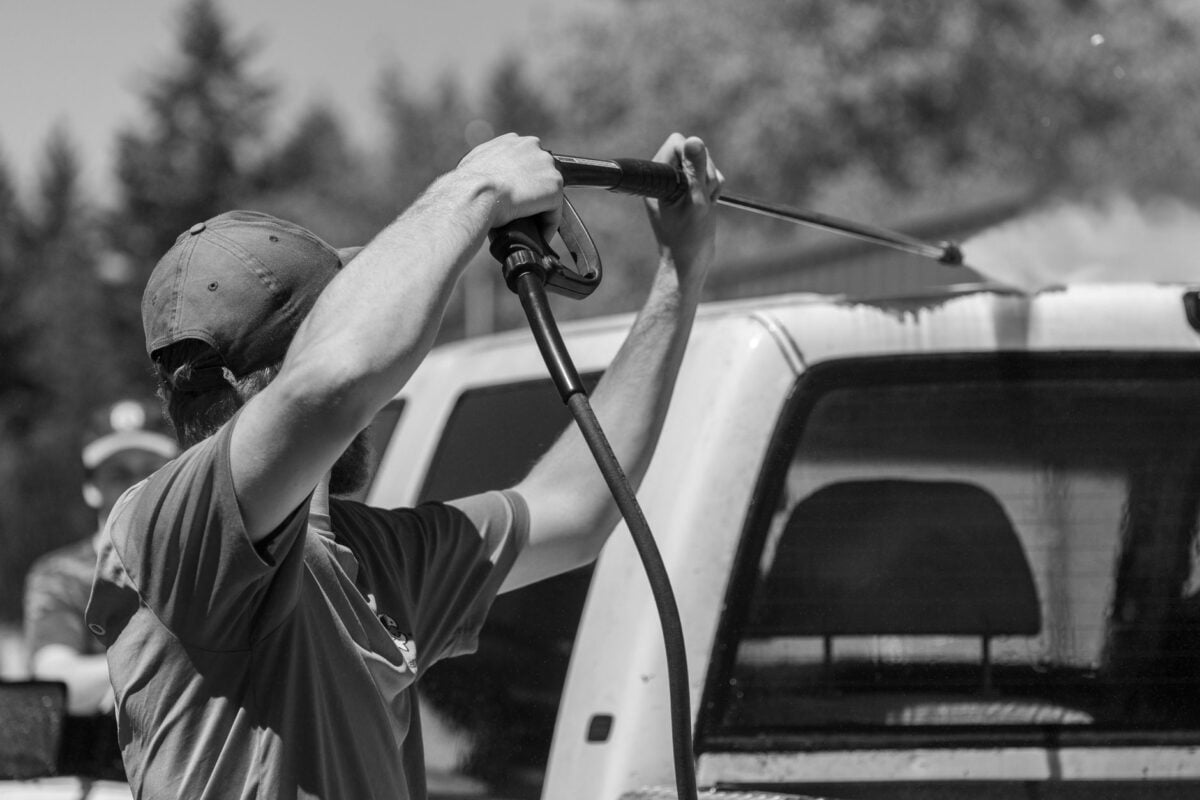
Kenzie was bent over the hood of a white minivan with a wash mitt, working at the bugs on the grille. She never stopped. She never even lifted her head.
That was the part that went through me. A girl who is surprised looks up. A girl who has watched it happen thirty times keeps scrubbing.
I sat there with both hands on the wheel. I am forty-five years old. I have driven a propane truck for nineteen years, and I have learned that the first thing a man wants to do is usually the thing he will be sorry for.
So I did not get out. I waited until she rinsed the minivan, waved the lady off, and coiled the hose. Then I honked once, short, and she came jogging across the street in her rubber boots.
The Coffee Can
“Hey, Daddy,” she said, climbing in. She smelled like car soap and hot concrete. Her arms were brown to the elbow and white above it, where her T-shirt sleeves had been all summer.
“Hey, Bug,” I said. I pulled out onto the street and drove two blocks before I said anything else. “What happens to your tip bucket at night?”
She looked out the window. The wheat stubble went past on the edge of town, gold and flat all the way to the sky. Harvest had been done for two weeks, and the elevator still had trucks lined up at it.
“Uncle Rusty takes it,” she said. “He says tips belong to the business.”
“Every night?”
“Every night, Daddy.” She picked at a bit of dried soap on her knee. “He says water isn’t free, and soap isn’t free, and the bay isn’t free. He says I’m lucky to have a job in this town at sixteen.”
I kept my eyes on the road. “How much was in it, do you think? Over the summer.”
She had already figured it. That is my girl. She keeps a little spiral notebook in her back pocket with every hour she works and every dollar Rusty hands her on Saturday.
“I count it before he comes out,” she said quietly. “Most days it’s ten or fifteen. Saturdays it’s more. Close to six hundred, I think. Since the first of June.”
“Why didn’t you tell me?”
She shrugged, the way kids do when the answer is too big to say. “Because he’s Mama’s brother,” she said. “And because Mama would cry. And because then Thanksgiving would be awful.”
I did not have an answer for that, because she was right.