
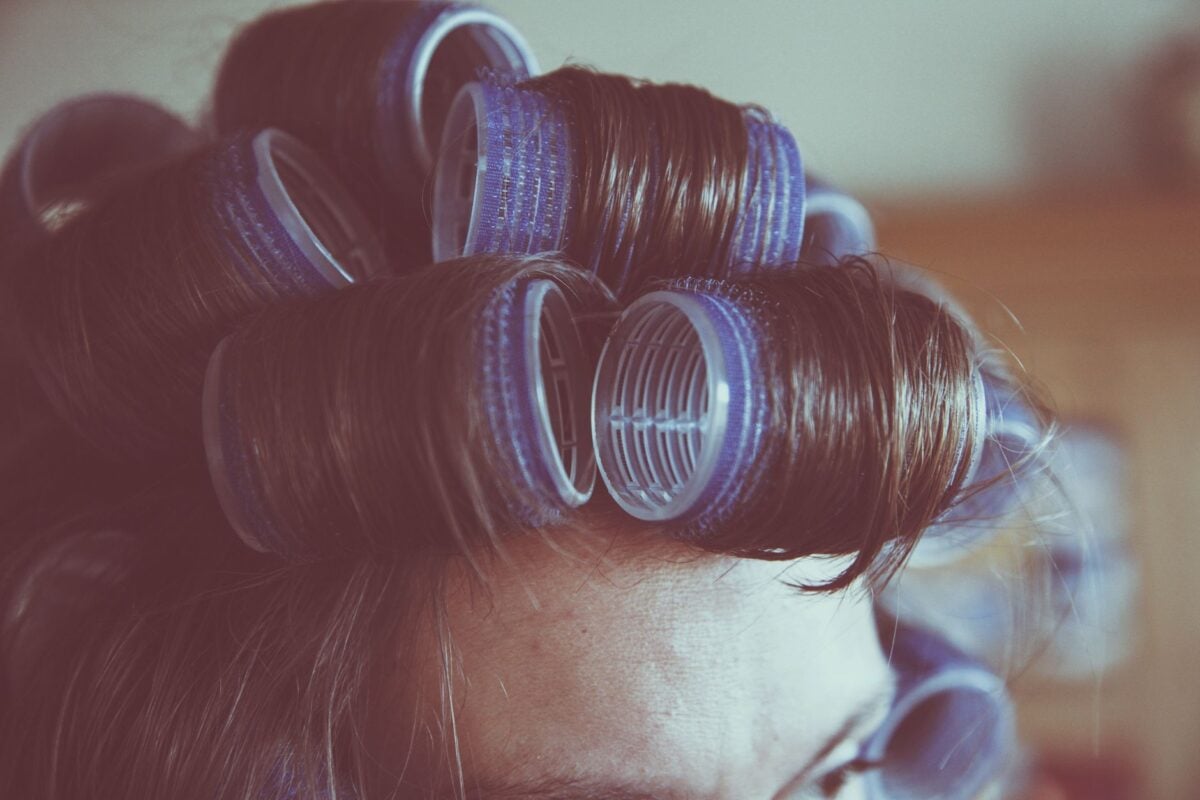
Mom told me the story at her kitchen table with a scarf tied under her chin, the way women her age tie them when the wind is up or the hair is not fit to be seen. It was noon on the last Friday in February, and her hair was not fit to be seen.
“I walked in at five till nine like always,” she said. “And there was a woman in my chair. Trina was already rolling her. She didn’t even stop.”
I had come by on my lunch hour with a sack of groceries, the way I do on Fridays. Mom is 83. She lives in the same white house on Elm Street where she raised my brother and me, three blocks from the only beauty shop in our little town southeast of Salina.
That beauty shop belongs to my brother’s wife, Trina Kreutzer. And for thirty years, every single Friday, my mother had the nine o’clock.
I set the milk in the refrigerator and sat down across from her. The kitchen smelled the way it always smells, coffee and Ivory soap and something baking, though that morning nothing was baking. She had not had the heart.
Get a new story in your inbox every morning.
Facebook doesn’t show you every story we post. Our free newsletter does. Join 2,500+ readers.
“What did she say, Mom?”
My mother folded her hands on the oilcloth. Her knuckles are swollen now, the arthritis that came after thirty-one years of lifting stockpots and sheet pans as a school cook. She cannot hold a roller tight enough anymore to set her own hair. That is the whole reason the Friday chair mattered.
“She said, ‘Velda, I gave nine o’clock away. Come Tuesdays if there’s a cancellation.'”
“In front of people?”
“There were four ladies under the dryers. Lorna was one of them.” Mom looked at the window. “And then she said, ‘Thirty years at the same price and a two-dollar tip. I can’t carry it.'”
I sat very still. I am fifty-two years old, and I manage the office at the grain elevator, and I have heard farmers say things over a scale ticket that would curl paint. But I had never heard anything that made my face go hot like that.
The Friday chair
You have to understand what that chair was.
In 1996, my mother was fifty-three and still cooking at the grade school, and a nineteen-year-old girl fresh out of beauty college in Salina came to work at the shop on Main. The girl was Trina. She was shy and skinny and so nervous her hands shook the first time she put rollers in.
Mom sat in her chair anyway. She told the owner back then that she wanted the new girl, every Friday, nine o’clock, because somebody had to give that child a regular. She tipped her two dollars that first day. It was a good tip in 1996 on a twelve-dollar set.
Two years later, my brother Dwight came by the shop to pick Mom up because her car was in the shop. Trina was combing her out. Dwight stood in the doorway with his cap in his hands, and Mom said later she knew right then. They were married the next summer.
So it was Mom who brought Trina into our family. That is not a thing she ever said out loud. But all of us knew it.
When the old owner retired, Trina bought the shop. Mom kept the nine o’clock. Trina raised the price to fourteen dollars at some point I cannot remember, and then she never raised it again for Mom, though everybody else paid more. Mom kept leaving two dollars on the counter, folded once, the way she had always done.
Every Friday for thirty years. Wash, rollers, twenty minutes under the hood dryer, comb out, a cloud of hairspray. Then she went home and wore a hairnet to bed every night so the set would last through Sunday church and into the week.
Fridays were the day she saw people. The shop was where she heard who was sick and who had a new grandbaby and whose wheat looked good. After Dad died, it was the one appointment she never missed, not for snow, not for the flu, not for anything.