
I found my father sitting on Hedvig Moe’s front step at noon on the Friday before Christmas, a scoop shovel across his knees, too winded to say my name.
Hedvig was 91 years old and sitting beside him in her housecoat with a quilt around both their shoulders. She had hold of his hand the way you hold a child’s hand at a crosswalk, and she did not let go when I came up the lane.
Behind them was a quarter mile of snow. Eight inches had come down overnight, and then the wind had come across the ridge and packed it into drifts that went to my knees.
Dad had shoveled maybe forty feet of it. Forty feet, at 86, with a heart doctor in La Crosse who had told him in October to take the stairs one at a time.
“He wouldn’t come in,” Hedvig said. “I told him and told him. He said he’d get it done by dinner.”
Get a new story in your inbox every morning.
Facebook doesn’t show you every story we post. Our free newsletter does. Join 2,500+ readers.
“I’ll get it done,” Dad said. It came out in pieces, with breath between them. “Just sitting a minute, Inga.”
I knelt down in the snow in front of them. My father has big hands, dairy hands, the knuckles gone square from fifty years of milking. They were shaking on the shovel handle, and I put mine over them.
“Dad,” I said. “Where’s Troy?”
He did not answer me. Hedvig did.
“In town,” she said. “Plowing driveways. Lillian’s grandson saw him on Main Street at six this morning.”
My name is Inga Engebretson. I am 48. I weld for a living, farm repair mostly, out of a shop on the home place in Vernon County, in the hills of western Wisconsin where the roads follow the creeks and every farm has a name painted on the barn that is not the name of the people who live there anymore.
My father is Halvard Engebretson. He milked cows on our home place for fifty-one years and sold the last of the herd in 2001, the same winter Hedvig’s husband Arnfinn died of a stroke out in his machine shed.
That was the winter Dad started plowing the road.
It is a town road two miles long that climbs the ridge and meets the back way into Viroqua, with seven farms after ours. By 2001 most of the men who had farmed those places were gone, and their wives were still living in the houses, with lanes too long to shovel and no money to pay anybody.
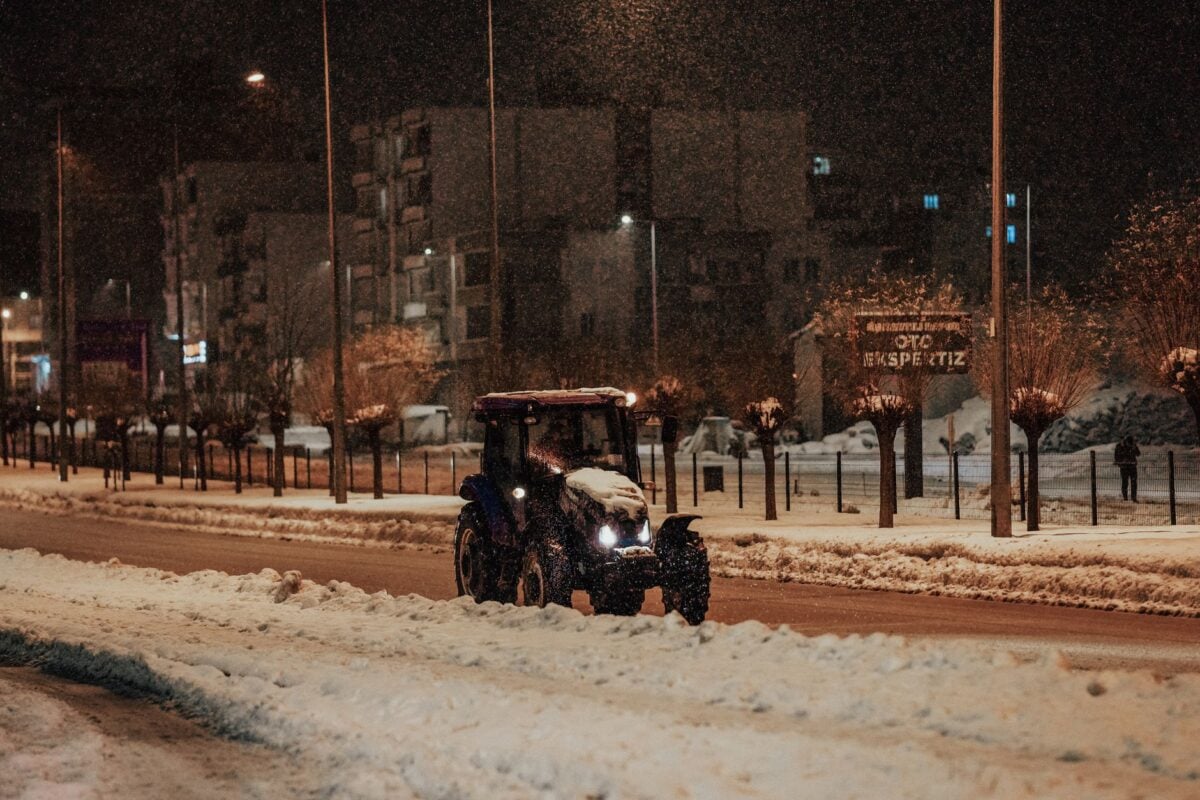
Dad did not make a speech about it. He bought a used steel blade off a township truck that was being sold for parts, built a frame for it on the front of his 1951 Ford 8N, and after the next storm he plowed every lane on the road.
He has done it after every storm since. Twenty-five winters. Seven widows. He has never taken a dollar, and he has been offered plenty, and he always says the same thing.
“Put it in the plate on Sunday.”
The tractor is gray and red, the old Ford colors, and it runs because I keep it running. The blade lifts with a hand lever he rigged that first winter. It is not fast and it is not pretty, but it moves snow, and every woman on that road knows the sound of it coming.
My sister Karin is five years older than me. She married Troy Lien when she was twenty-two, and they live in a ranch house on the edge of Viroqua with three kids, a dog, and a mortgage that has always been a little bigger than it should have been.