
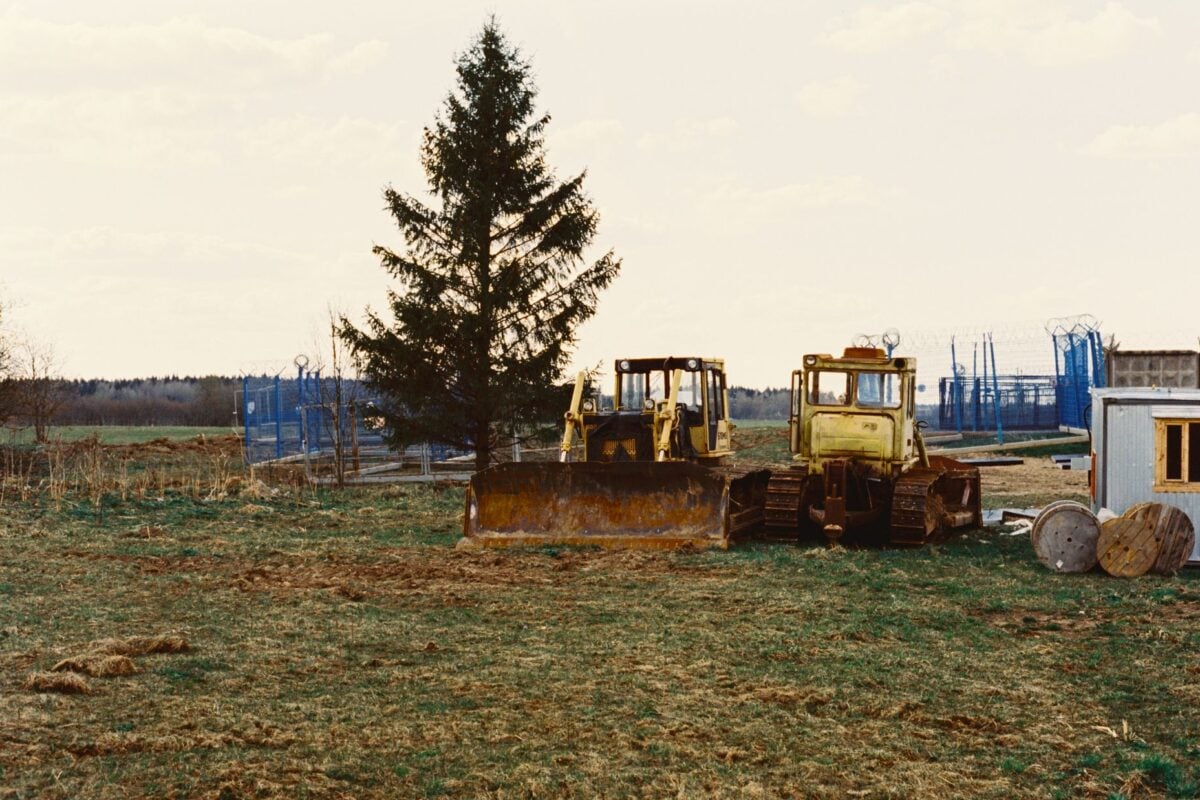
“That field’s done, Leroy,” Quentin said, and he said it the way you’d tell a man his dog had died, soft and sorry, with both forearms resting on the top wire of Dad’s fence.
It was a Monday morning in the middle of May, bright and still, the kind of morning that makes the Flint Hills look like nothing bad has ever happened in them. The meadowlarks were going. The bluestem on the far hill was coming green.
And thirty feet in front of us, the south hayfield was split open like a loaf of bread.
Dad stood beside me with his cane planted in the wet grass. He was wearing his tan felt hat and the denim jacket Mom bought him the last Christmas she was alive, and he did not look at Quentin. He looked at the gully.
“I’ll take the forty off your hands,” Quentin went on. “Twelve hundred an acre. I know it’s not what it was worth last week. But it’s what it’s worth now, and you don’t need the headache.”
Get a new story in your inbox every morning.
Facebook doesn’t show you every story we post. Our free newsletter does. Join 2,500+ readers.
Twelve hundred an acre. Forty acres. Forty-eight thousand dollars for the best hay ground on the place, the field Dad had cut every June and every August for fifty years.
I kept my mouth shut. I was surprised at myself, honestly, because I am not a woman who keeps her mouth shut. But something about the way Dad was standing told me that if I opened it, I would make things worse for him and not for Quentin.
“I’ll think on it,” Dad said.
Quentin nodded and patted the fence post like it had done him a favor. “No hurry,” he said. “Well. Some hurry. I’d want to get it worked before the rest of the season gets away.”
Then he walked back to his pickup on the section road and drove off toward his own place, a quarter mile east, and Dad and I stood there and listened to the meadowlarks.
“You’re not going to sell him that field,” I said, when the dust had settled.
Dad didn’t answer. He just kept looking at the gully, and that scared me more than the gully itself.
I should back up. My name is Stacia Wendling. I’m forty-eight years old, and I have run a bulldozer on a highway crew in this part of Kansas for twenty-two years.
I live in a small house on the edge of town, about eleven miles from the home place in Chase County where I grew up. My dad, Leroy Wendling, still lives out there alone. Mom passed four years ago this fall.
My sister Marcy is two years older than me. She married Quentin Ferrell when she was twenty, and they’ve farmed the ground east of Dad’s ever since. Quentin is fifty-two. He works hard. I have never once said he didn’t.
The rain came on a Thursday night. The radio had been talking about it all afternoon, a line of storms building out west, and by suppertime the sky over the hills had gone the color of a bruise.
I called Dad before dark to make sure his truck was in the shed and his flashlight had batteries. He told me he’d lived through more storms than I’d had birthdays, and then he told me he loved me, which he did not used to say on the phone.