
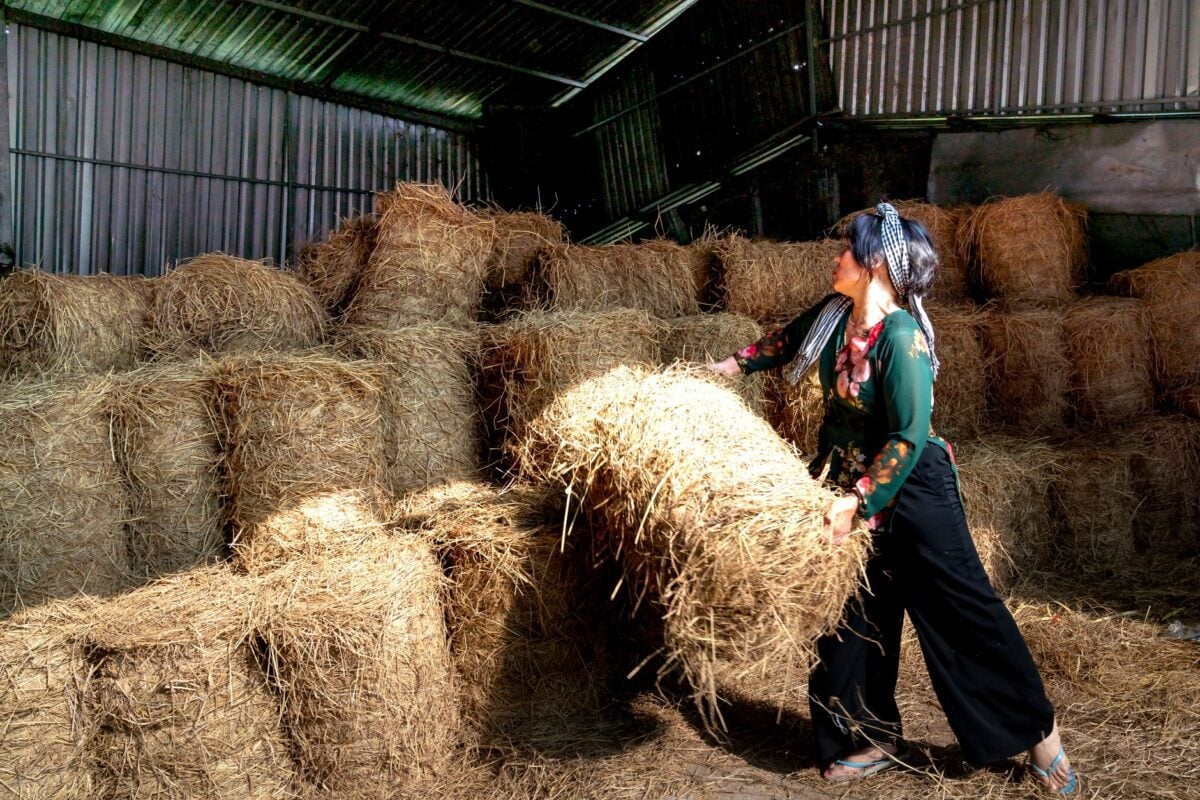
My uncle Gaylon laughed at my daughter on the first Saturday in June, in the feed store, in front of six farmers and a man buying mineral blocks.
It was not a mean laugh, exactly. It was the laugh of a man who has been right about one thing for so long that he has forgotten he could ever be wrong about it.
Brynlee was sixteen that spring. She had saved $38 out of her birthday money and her babysitting jar, and she had picked out a pair of leather work gloves off the rack by the register.
She was holding them when Gaylon came in. He had his seed cap pushed back and his hands in his back pockets, the way he has stood since I was a little girl.
“Uncle Gaylon,” she said, “I’d like to work on your crew this summer. I can start whenever you start.”
Get a new story in your inbox every morning.
Facebook doesn’t show you every story we post. Our free newsletter does. Join 2,500+ readers.
She had practiced that sentence in the truck. I heard her say it twice under her breath on the way into town, the way she used to practice her lines for the Christmas program.
Gaylon looked at her gloves. Then he looked at her. Then he laughed, and he turned toward the counter where the men were waiting on their tickets.
“Girls can’t throw bales,” he said. “I’d be paying them to sit on the trailer and hand out water.”
Two of the men laughed along with him. One of them said something about the girls getting a tan, and the other one said something I will not write down.
One man did not laugh. He was older than all of them, thin as a fence post, and he was paying for a sack of chicken scratch with exact change. He just looked at Gaylon for a long second.
Brynlee went red from her collar to her ears. I saw her hands tighten on those gloves until the leather creaked.
“Yes sir,” she said. That was all. She laid her money on the counter, waited for her change, and walked out the door with her chin up.
I followed her. I did not say anything to Gaylon. I did not trust what would come out of my mouth, and I have learned that the things I say angry are the things I spend a year taking back.
She did not cry in the parking lot. She did not cry pulling out onto the highway. She held it until we turned onto our county road, past the Methodist cemetery, and then she put her face in her hands.
“He said it to all of them,” she said. “Mama, he said it so all of them would hear.”
“I know, baby,” I said. “I heard him.”