
He never once looked up at my truck. I want to say that first, because I have gone over it a hundred times, and that is the part that stayed with me longest.
I had come over the hill on the field road just after three in the afternoon, the last Tuesday in November, to count my bales before a cold snap. I counted them every week. It was a habit my grandpa gave me.
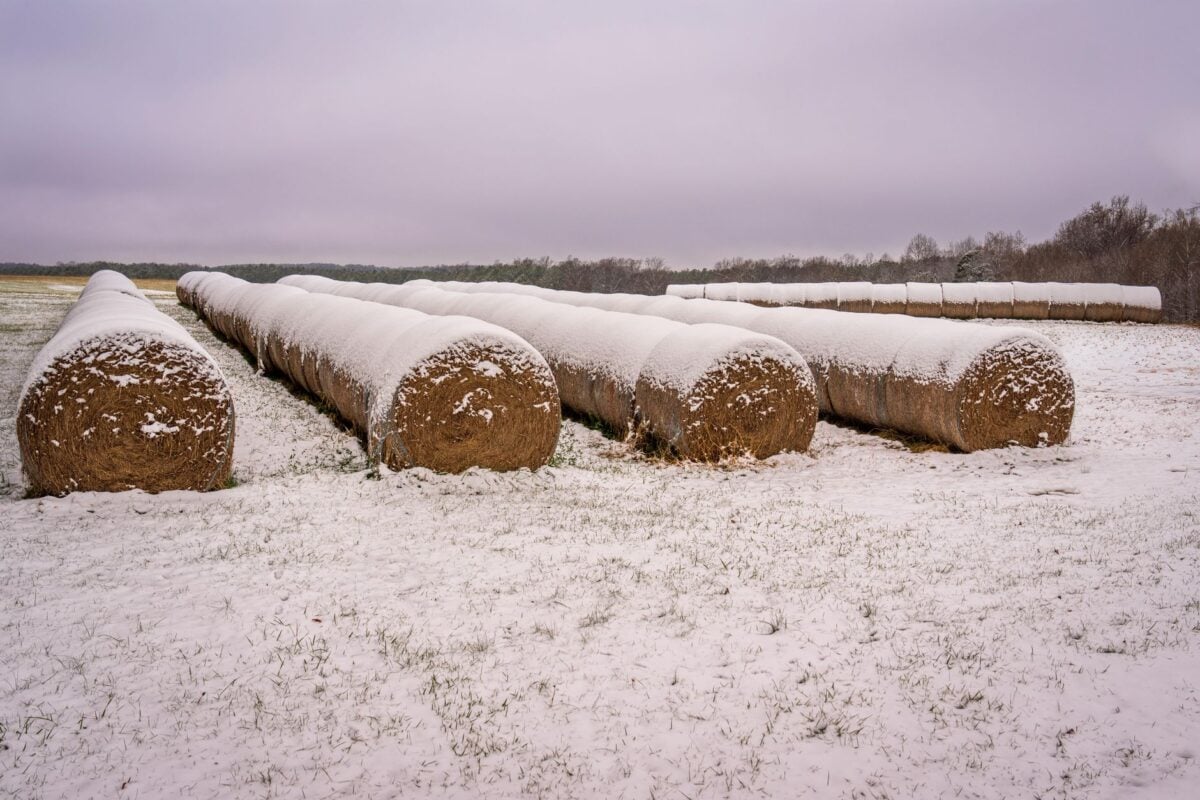
The bales were where they always were, in a long row on the high strip above Beaver Creek. Forty-five of them, net wrapped, five foot by six, about thirteen hundred pounds apiece. My winter.
Except the row was shorter than it should have been, and my cousin Kent was at the end of it on his old loader tractor, with the bucket down low and the engine working.
I stopped the truck on the hill. I didn’t even put it in park at first. I just sat there with my foot on the brake and watched him catch the next bale on the bottom edge of the bucket.
Get a new story in your inbox every morning.
Facebook doesn’t show you every story we post. Our free newsletter does. Join 2,500+ readers.
He didn’t spear it. He didn’t lift it. He pushed it, the way you’d push a snowbank, and the bale rolled over once, twice, and went off the edge of the bank.
It hit the shelf ice along the creek and broke straight through. The creek is not deep there in the fall, maybe three feet, so it didn’t go under. It just sat down in the water like a tired animal.
I put the truck in park. I turned the heater up, because my hands had gone cold in a way that had nothing to do with the weather.
He did it again. And again. I counted, because counting is what I do when I don’t know what else to do. Eight. Nine. Ten. Eleven.
Then he backed the loader around, lifted the bucket, and drove off along the fence line toward his place without once turning his head up the hill toward a blue flatbed truck he had known his whole life.
I sat there another few minutes. I want to be honest about this part. I did not jump out and run down there shouting. I am not built that way, and anyway it would not have done one thing.
You do not win anything yelling at a man on a loader. He can’t hear you, and if he could, he’d only dig in. I learned that from my dad, and from Grandpa before him.
When I was sure he was gone, I got out and walked down the hill.
It was colder than it had been in the truck. The wind came straight down the creek bottom the way it does in late November, and I pulled my red knit cap down over my ears and zipped my brown canvas coat to the chin.
I stood on the frozen bank and looked at them. Eleven round bales, sitting down in the creek ice, the water already working into the net wrap and darkening the hay from the bottom up. By morning there would be snow on top of them.
At about $118 a bale that fall, that was a little over $1,300 sitting in Beaver Creek. That was better than two weeks of feed for my cows. That was a payment on the truck.
But it was not the money that made my chest ache. It was the way he hadn’t looked up.