
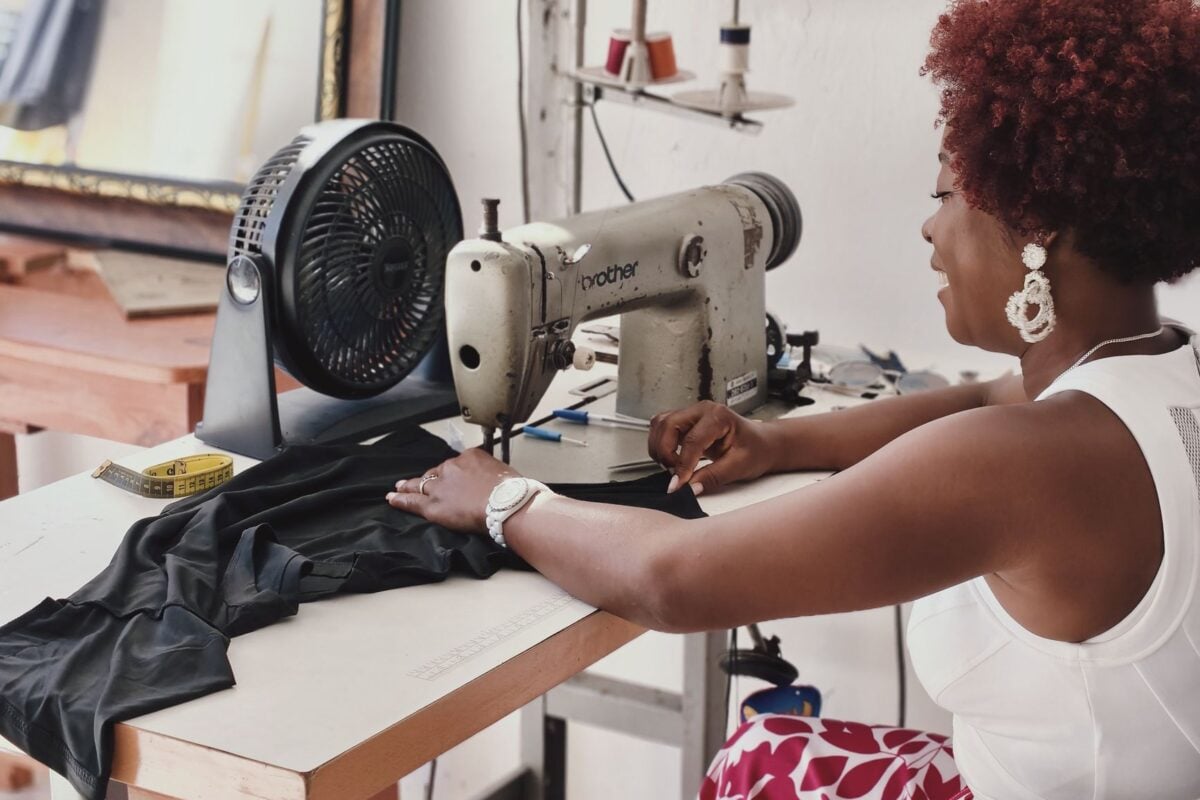
The Singer went across the folding table for one hundred and fifty dollars, and I was standing one step away when it happened, close enough to smell the machine oil.
My aunt Connie held it by the arm and the base, the way you hold something heavy you have carried before.
The man on the other side of the table wore a seed cap and had gray hair sticking out under it.
In my hand was a little note card I had found in Grandma’s sewing drawer two weeks earlier.
I had brought it in my coat pocket all morning, waiting for the right minute, and the right minute never came.
Get a new story in your inbox every morning.
Facebook doesn’t show you every story we post. Our free newsletter does. Join 2,500+ readers.
“Connie,” I said. “Can I talk to you before that goes?”
She didn’t let go of the machine, and she didn’t look at me. She said, “Abby, I’ve got a line of people. Can it wait?”
It was an overcast October afternoon in Grant County, Minnesota, the kind of sky that sits low over the bean stubble and never makes up its mind about rain.
Grandma’s white farmhouse stood behind us with every door propped open.
There were folding tables all over the yard. Dishes and Grandpa’s old hand tools spread across the ones nearest the house, her canning jars in boxes on the grass at a quarter apiece.
People from three townships walked between them with coffee in foam cups.
I held out the card. Connie took it with one hand, still holding the Singer with the other, and she read it the way you read a grocery list somebody else wrote.
The card said, in Grandma’s shaky blue ballpoint: The Singer goes to Abby, she’s the one who sews.
Underneath it she had signed her name, Edna Thorson, the way she signed birthday cards, with a little line under it.
Connie handed it back to me. “A note isn’t a will, honey,” she said. Then she passed the machine across the table to the man in the seed cap, and he set down three fifty-dollar bills.
That was all. Nobody raised a voice. The woman behind him was already asking about the price of a cast iron skillet, and Connie turned to answer her, and the man walked off past the dish tables with my grandmother’s Singer against his chest.
I should tell you what that machine was, so you understand why I stood there with my mouth shut and my eyes stinging.
It was a black Singer 201, made sometime in the early fifties, with gold scrollwork on the bed that had worn off where Grandma’s wrists rested.
It sewed one stitch, straight, and it sewed that stitch through anything you fed it.
Grandma Edna bought it used in 1961 with egg money.
She kept the receipt in the drawer until the paper went soft as cloth.
She made Connie’s prom dress on it, and my dad’s Boy Scout patches went on with it, and when I was eight she stood behind my chair and put my hands on the fabric and showed me how to let the machine do the pulling.
“You don’t push it,” she said. “You guide it. It knows where it’s going. You just keep it straight.”
I sewed my first apron on that Singer. I sewed my first quilt top on it at twelve, crooked as a fence line, and Grandma hung it over the back of the davenport anyway like it belonged in a museum.