
Marla set the paper down on Mom’s kitchen table like it was a church bulletin, flat and squared to the edge, and turned it so the signature line faced the wheelchair.
The April light came through the window over the sink and lay across the green cabinets Daddy painted the year I graduated high school.
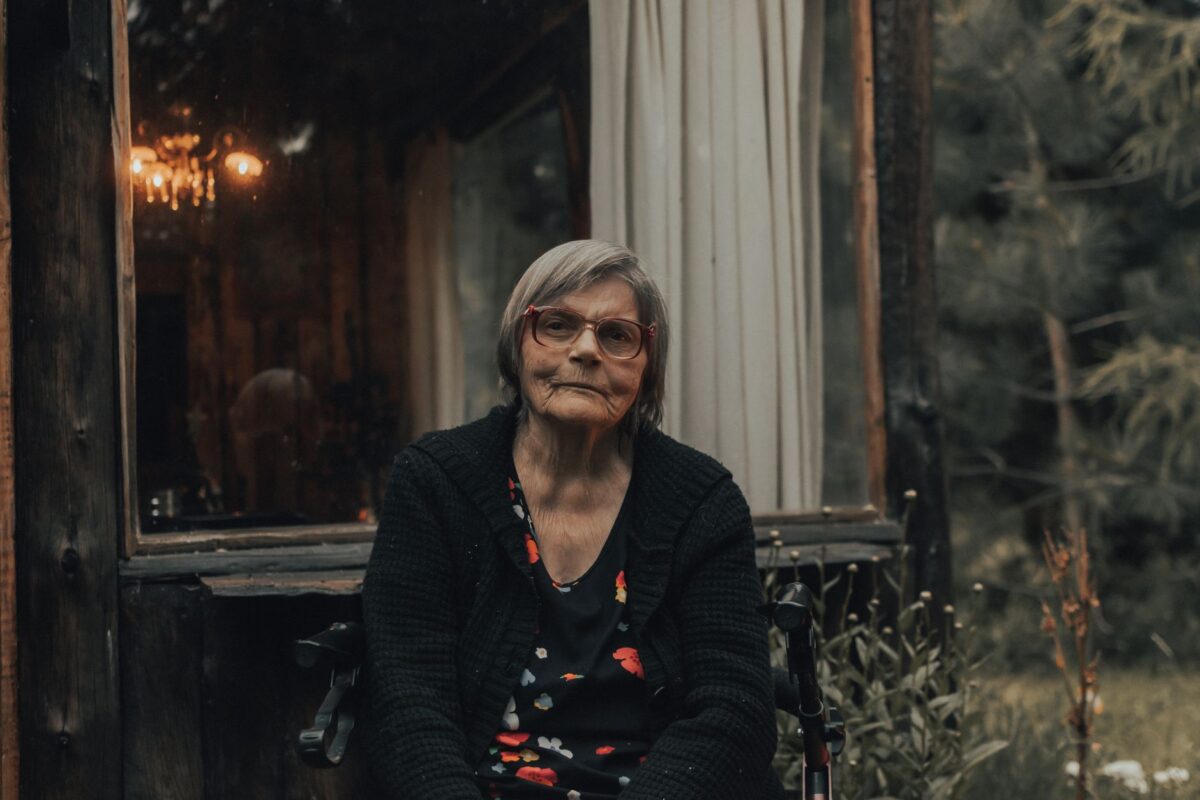
Mom sat in her wheelchair in her lavender housecoat, her short white hair still flat on one side from the pillow. A white gauze patch was taped over her left eye.
It had been three weeks since the corneal transplant, and the doctor had put the patch back on after a stitch worked loose.
I was at the sink with a dish towel in my hand, drying the same coffee cup I had already dried twice.
Get a new story in your inbox every morning.
Facebook doesn’t show you every story we post. Our free newsletter does. Join 2,500+ readers.
My hair was clipped up off my neck, more gray in the brown than there was the year before. I had on my old blue work shirt from the feed mill, faded nearly white at the elbows.
My three sisters stood around the table in their sweaters and their good jackets.
They had driven up the mountain together that morning in Kay’s car, which should have told me something right there, because the three of them had not ridden anywhere together since Daddy’s funeral.
“Right there, Mama,” Marla said, and pointed at the line with one finger. “Sign right on that line. It’s just to protect the house. It’s what everybody’s doing now.”
Mom turned her head so her right eye was on the paper. That eye has had macular degeneration for six years.
She can see a face across a room, more or less, but she cannot read a hymnal anymore without the big print, and this was not big print.
“What is it, exactly?” Mom asked. She was not suspicious.
She was just a woman who had kept the books for a cotton gin for thirty-one years and had never in her life signed a thing she did not understand.
“It’s a quitclaim deed,” Kay said. Kay is the baby, forty-nine, and she sells real estate in Chattanooga, so she said the words the way you say the name of a casserole you make every week. “It puts the house in our names so the nursing home can’t take it.”
“I’m not going to a nursing home,” Mom said.
“Nobody’s saying you are,” Teresa said quickly. Teresa is the nurse, fifty-four, from Birmingham. She had her hand on the back of Mom’s chair. “It’s just in case, Mama. Just so if something happens, the house stays in the family.”
Mom held the pen Marla gave her. She did not sign right away.
She turned her head toward the sink, toward me, the way she does when she wants to know what I think and does not want to ask in front of people.
I did not say anything. I want to be honest about that. I could have. I could have walked over and read that deed out loud, every word of it, and maybe I should have.
But I was not sure yet what I was looking at, and Mom was tired, and her eye hurt.
So Mom signed. Alma Mott, in the same careful hand she signed my report cards with, the letters a little bigger than they used to be. Marla slid the paper back and looked at it and nodded.